The New Gatekeepers: How Capital Now Decides Fashion’s Breakout Brands
Behind the Breakout: Fashion’s Quiet Power Brokers
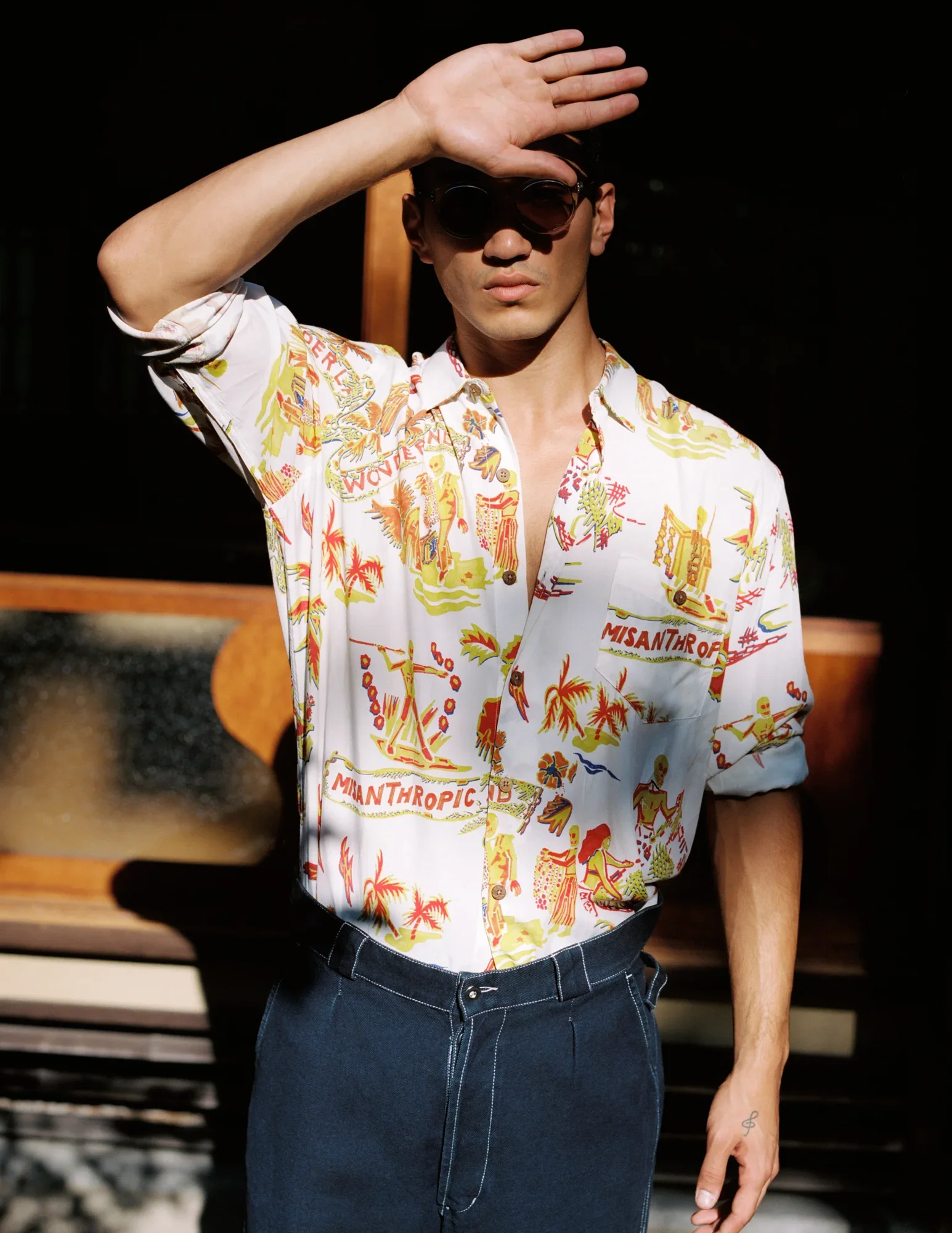
Our Legacy Spring/Summer 2016 Collection, Kennedy Magazine
What do Our Legacy, Officine Universelle Buly 1803, and Aimé Leon Dore have in common? Beyond being some of the most closely watched labels of the past few years, they share a quieter link: strategic backing from LVMH. Apart from Buly, none are owned by the French luxury group. Instead, each has received minority investment from LVMH Luxury Ventures, the conglomerate’s dedicated venture capital arm.
These investments are less about patronage than precision. Through carefully placed stakes, LVMH Luxury Ventures provides select brands with the capital to expand into new markets, open flagships and professionalise operations, while allowing them to retain creative independence. This is not money thrown at trends, but a methodical approach to scaling cultural relevance.
Taken together, these bets reveal a broader shift. A small network of luxury-backed investment arms now plays an outsized role in deciding which brands, technologies and experiences gain the resources to grow. If these vehicles are quietly shaping what reaches the global stage, they may also be redefining how fashion produces its next big things.
From Runways to Returns: Fashion’s New Power Structure

Aimé Leon Dore Autumn/Winter 2021 Collection, Kennedy Magazine

Flexjet’s Embraer Praetor 600 plane, Elite Traveler
The idea of brands being “backed” is hardly new. What has changed is who that backing now comes from — and how quietly influential it has become. Beyond the runways, creative directors and recognisable logos sits a parallel power structure: investment arms and funds run by, or closely aligned with, luxury conglomerates. These entities take strategic stakes in brands, platforms and experiences, shaping which ideas are given the capital, time and infrastructure to grow.
One of the most visible examples is LVMH Luxury Ventures. Established in 2017, the fund was designed to take minority stakes in high-potential independent brands, typically investing between €5 million and €25 million. Its portfolio is telling. Stakes in Officine Universelle Buly, Gabriela Hearst, Our Legacy and Aimé Leon Dore suggest a careful eye for cult credibility and long-term desirability rather than fast hype. Most recently, the fund invested in French knitwear specialist Molli — a move that reinforces LVMH’s interest in discreet, heritage-led brands with room to scale internationally.
Operating at a different order of magnitude is L Catterton, the private equity firm backed by LVMH and Groupe Arnault, which together own 40 per cent of the business. Formed in 2016 through the merger of Catterton with LVMH’s own investment activities, L Catterton now manages tens of billions in assets and counts more than 250 consumer investments. Here, luxury is treated as a lifestyle ecosystem rather than a category. Its $800 million investment into private jet operator Flexjet underscores that the modern luxury customer is as valuable in transit as they are in-store.
Then there’s Kering, LVMH’s closest rival, whose approach reveals both strategic caution and ambition. In 2023, the group acquired a 30 per cent stake in Valentino, with the option to take full control at a later date, alongside ongoing capital injections to stabilise the house. More recently, Kering announced plans for an investment arm known as House of Dreams, signalling a desire to diversify beyond its heavy reliance on Gucci and to nurture emerging brands and experiences more systematically.
These vehicles sit in a grey area between traditional mergers and acquisitions and pure venture capital — close enough to their parent groups to share operational expertise, yet independent enough to place bolder, longer-term bets. In an industry where growth is slowing and certainty is scarce, they have become fashion’s new gatekeepers.
What Capital Rewards: Brands, Categories and Control
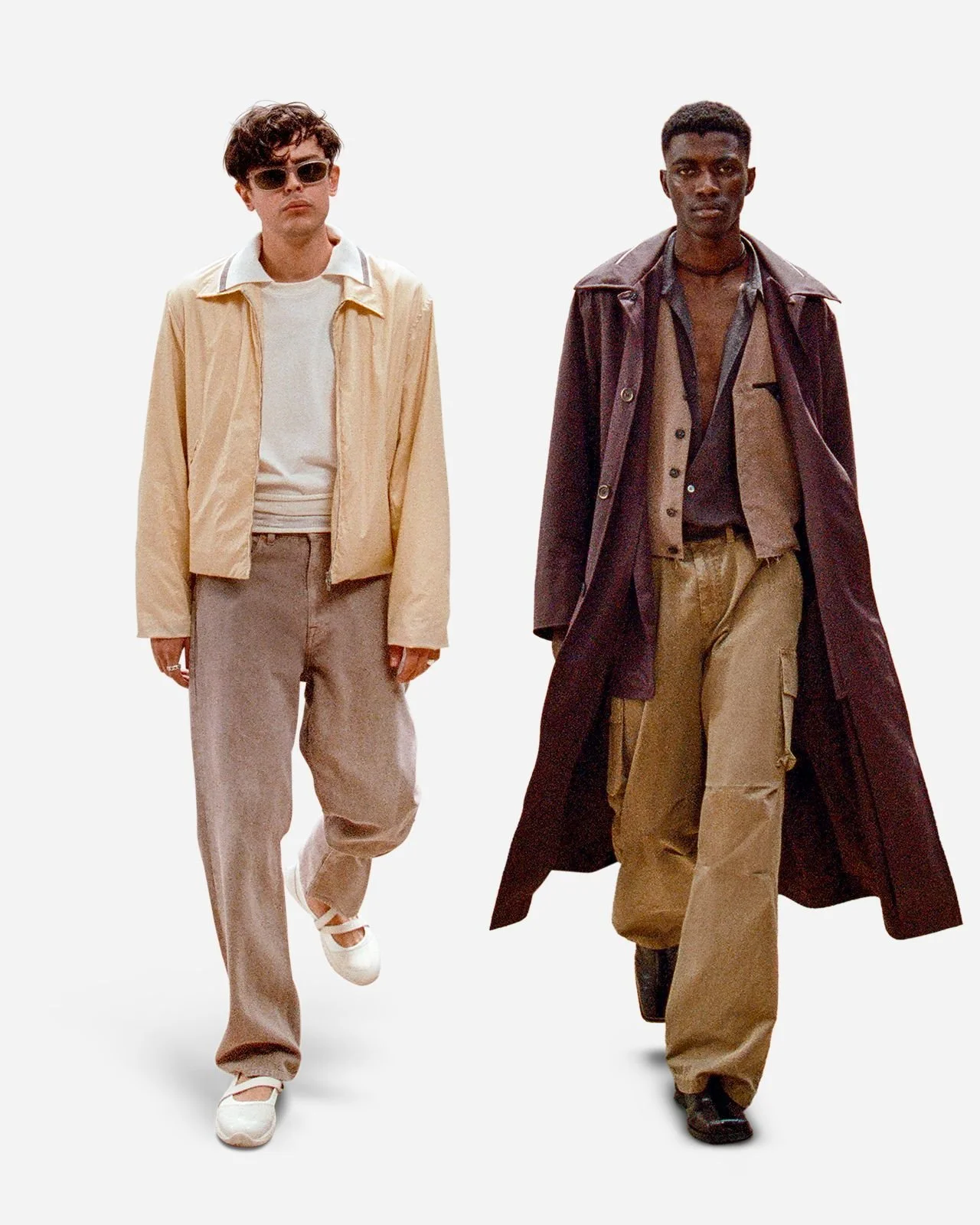
Our Legacy Spring/Summer 2024 Collection, GQ
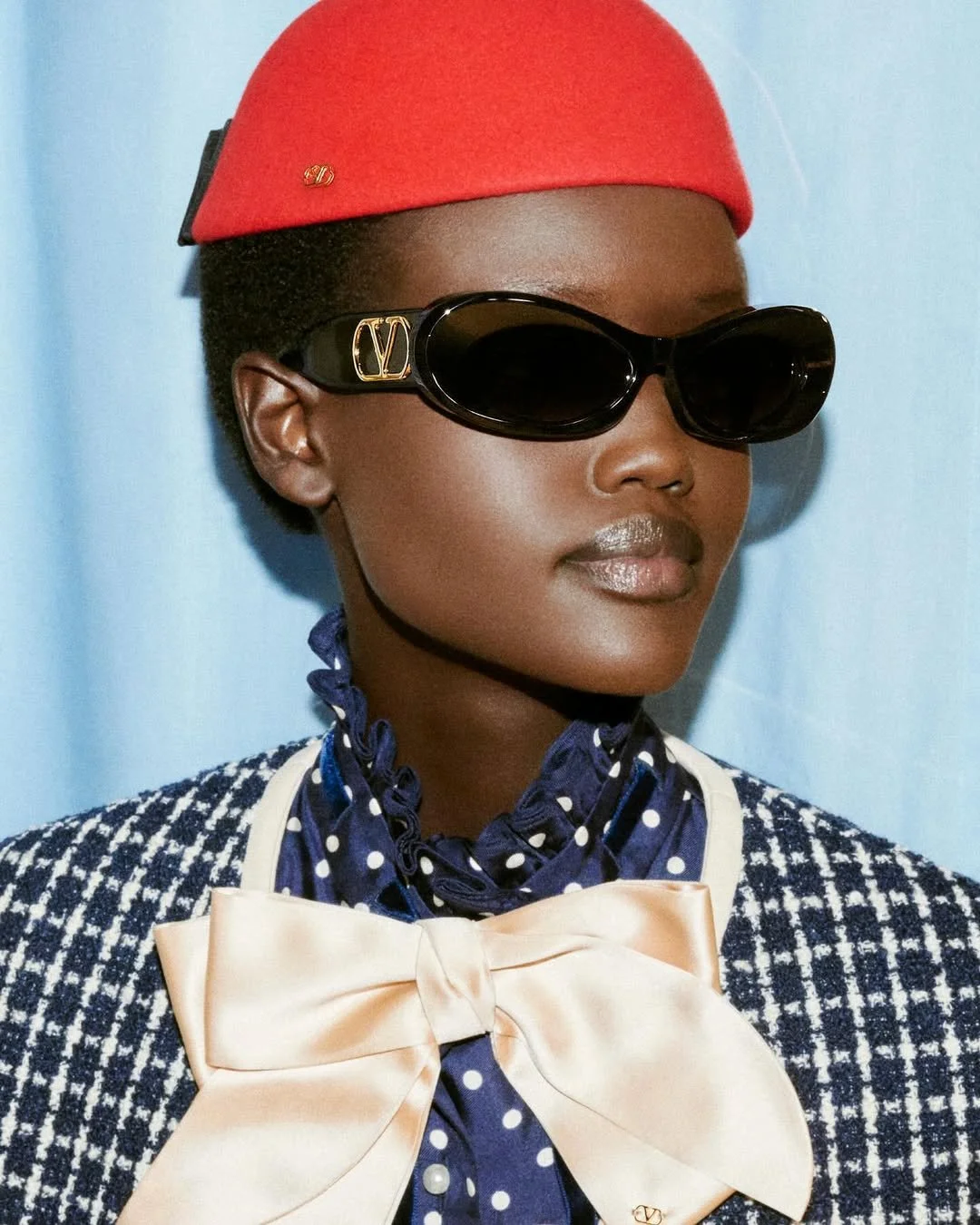
Valentino Eyewear, V.Magazine
Investment arms aren’t just placing bets for the thrill of it. Their portfolios reveal a clear strategic lens: they back concepts with cultural heat, scalable identities, and the potential to plug into a wider luxury ecosystem. The pattern is neither random nor romantic — it’s calibrated.
Cult Brands, Built for Scale
In November 2024, LVMH Luxury Ventures took a minority stake in Our Legacy — a move that followed an 80 percent surge in annual sales, pushing the brand to roughly €30 million. Its appeal lies in a precise design code: quietly luxurious menswear, asymmetrical tailoring, premium materials and a minimalism that feels both European and modern. The fund’s earlier backing of Aimé Leon Dore in 2022 reinforced the same instinct. ALD’s streetwear-meets-heritage aesthetic, rooted in New York but globally understood, already commanded deep cultural credibility and a fiercely loyal community. Add Gabriela Hearst — a house defined by craft, sustainability and a clear creative thesis — and the strategy sharpens further. These funds aren’t chasing hype cycles; they’re pursuing brands with identity density.
The common thread is unmistakable: early-stage labels with modest revenues but outsized cultural impact. Strong point of view, tight communities, and high engagement signal durability. Investors know that a brand with depth can scale slowly, cleanly, and across regions without losing its core.
Soft Power at Scale: Beauty, Eyewear and Adjacent Growth
Beauty remains one of luxury’s most dependable growth engines. McKinsey estimates global beauty sales reached US$446 billion in 2023 — a rise of around 10 percent year-on-year. Luxury beauty, after a brief cooling, is attracting renewed interest because it offers what fashion often cannot: repeat purchase cycles, high margins, and a broad entry point for new customers.
Adjacent categories are just as potent. Eyewear, for instance, represents roughly 7 percent of global luxury accessories revenue and has grown into a US$164 billion market. Groups such as Kering have aggressively verticalised these segments to stabilise earnings beyond fashion’s volatility. For investors, beauty, eyewear and accessories are not side dishes — they are strategic nodes that create resilience and recurring revenue.
Beyond Product: Luxury as Infrastructure
Investment arms are also widening their aperture beyond product entirely. L Catterton’s US$800 million commitment to Flexjet illustrates the logic: high-net-worth consumers don’t simply purchase luxury objects; they buy time, mobility, intimacy and insulation. Private aviation, concierge travel, wellness infrastructure — these are the new battlegrounds for loyalty. By backing the services that shape elite lifestyles, investors aren’t just expanding the definition of luxury; they’re future-proofing it.
Why Gatekeeping Has Become Strategic
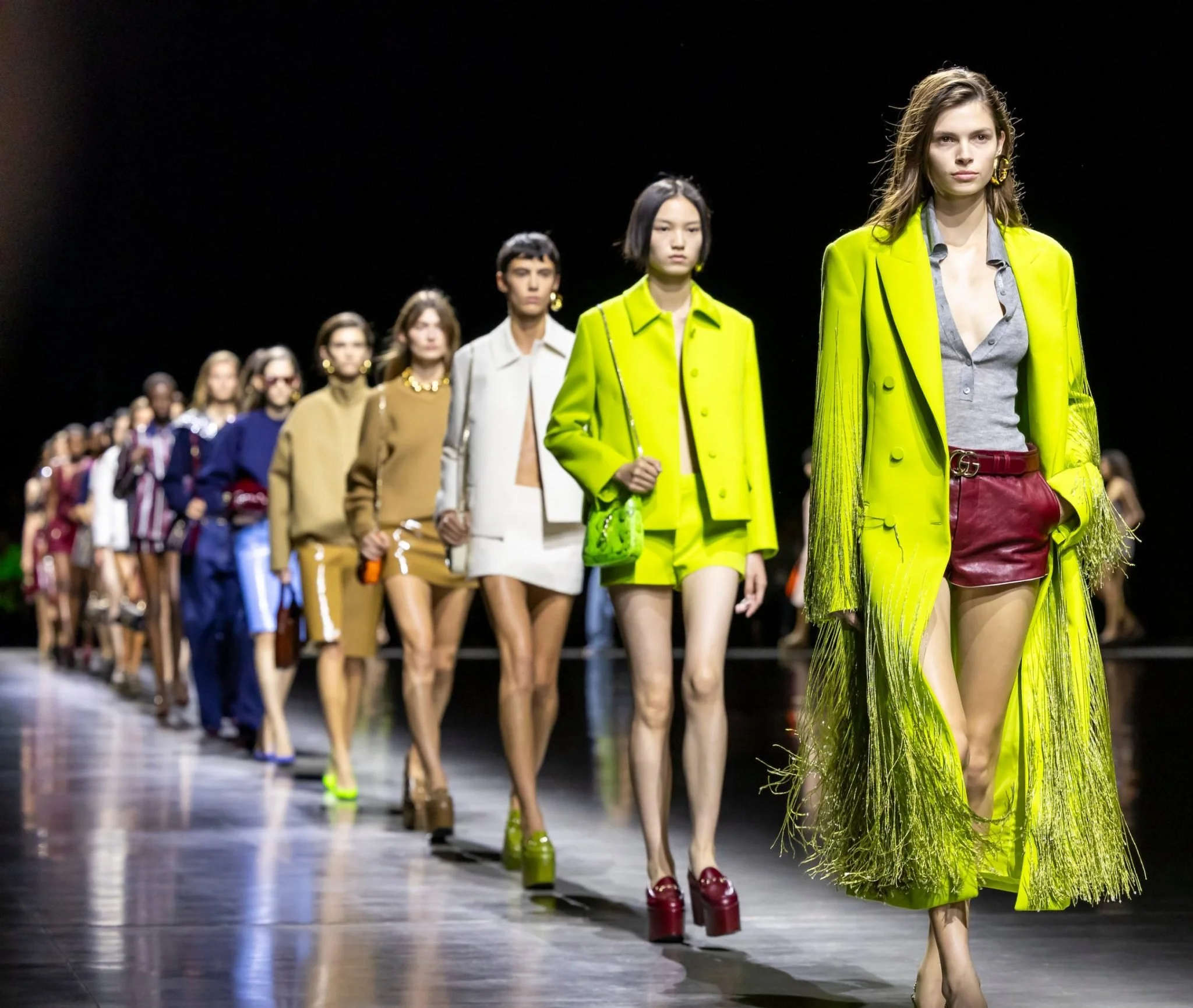
Gucci Spring/Summer 2024 Fashion Show, Grazia Singapore
The obvious question is: why now? Why does luxury — an industry that loves to speak in the soft language of craft, heritage and emotion — need gatekeepers at all? The answer is far less romantic. Behind the poetry, this is a capital-intensive, margin-sensitive sector that suddenly finds itself operating in one of the toughest macro environments it has faced in a decade.
For much of the 2010s, the tides did the heavy lifting. China’s expanding middle class, a surge in global tourism, and the dominance of logo-driven entry products created a rising market where almost every creative risk seemed to pay off. In that era, instinct was a strategy. Growth rewarded boldness.
That landscape no longer exists. McKinsey forecasts global luxury growth at just 1–3% annually from 2024 to 2027, while broader estimates from Mordor Intelligence place the market at a restrained 4–6% over the coming years — a stark contrast to the 18% boom from 2019 to 2023. In practical terms: the days of perpetual price hikes and automatic demand are over. Brands now have to justify their value — through sharper identity, tighter operations, disciplined assortment planning and far more calculated expansion.
With softer demand, rising costs and increasingly selective consumers, pressure on profitability intensifies. That pressure nudges the industry towards consolidation, diversification and a far more strategic approach to risk. Beauty, eyewear and experiential luxury offer steadier growth; niche labels with strong cultural resonance offer credibility; and minority investments offer optionality without the cost (or commitment) of full acquisitions.
Consider Kering’s recent trajectory. Its slowdown in 2024–25 because of Gucci exposed just how vulnerable a group becomes when too much depends on a single maison. The response — a stake in Valentino, plus plans for a dedicated investment unit — signals a deliberate attempt to rebalance the portfolio and avoid repeating the Gucci-centric overexposure.
This is where investment arms become essential. They allow conglomerates to place multiple smaller bets, rather than hinge growth on one blockbuster brand. They offer independent labels not just capital, but access to infrastructure, supply-chain muscle, retail networks and data. And they preserve upside if one of these fledgling players becomes the next Off-White or Jacquemus.
In a slower market, gatekeeping isn’t about control; it’s about survival — and about quietly shaping what fashion’s future might look like.
The Trade-Offs of Being Backed
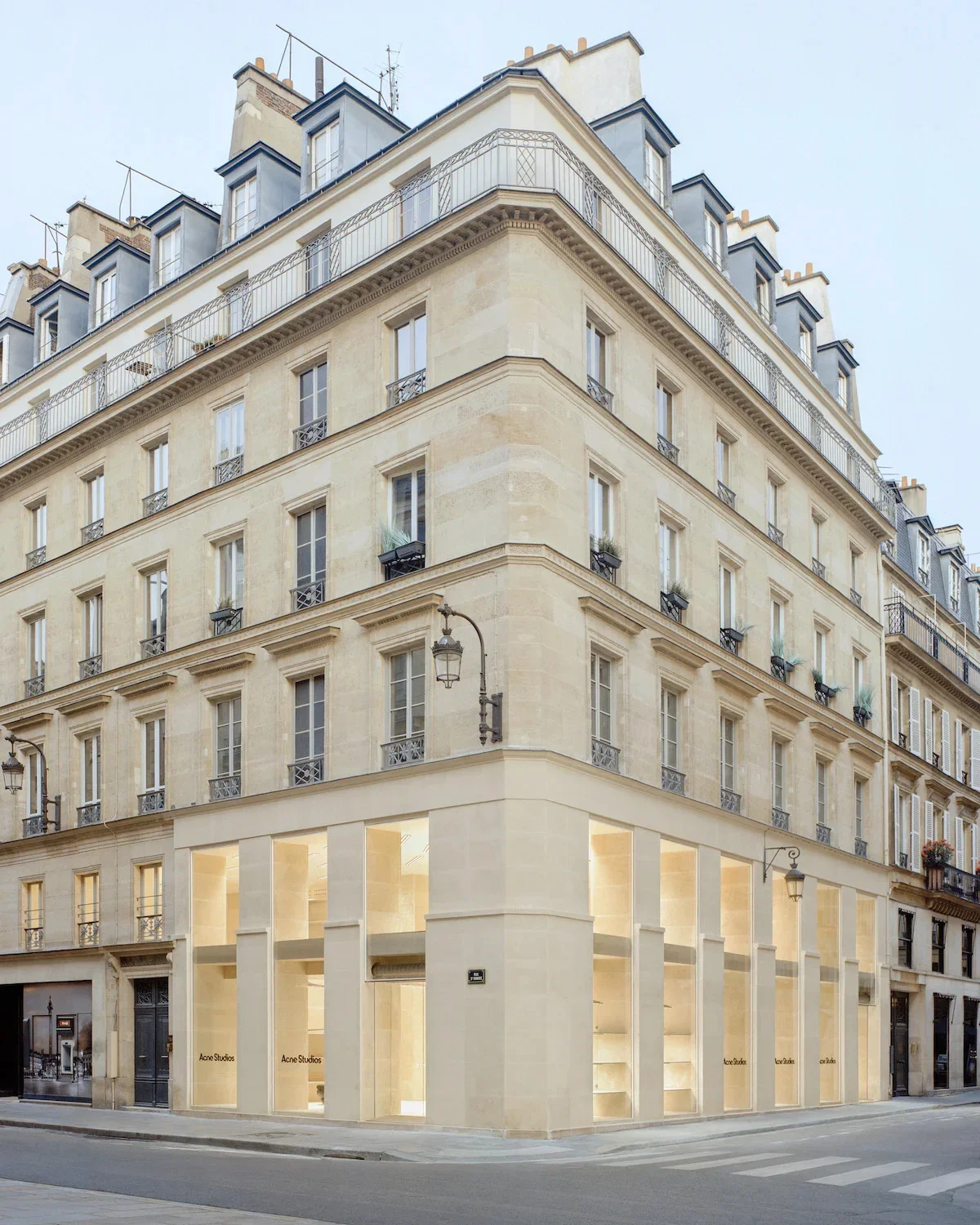
Rue Saint-Honoré, Highstay
As with any form of power, investor backing comes with trade-offs. For independent luxury brands navigating a volatile market, the appeal is obvious. Stable capital provides insulation in moments of economic downturn, competitive pressure or shifting consumer taste — all inevitabilities in fashion. Backing ensures that operating costs can be met even when revenues soften, avoiding the need for distressed inventory sell-offs or the forced licensing of intellectual property simply to keep cash flowing. Just as importantly, perceived financial stability reassures partners, suppliers and landlords, signalling longevity and seriousness in an industry where confidence is currency.
Capital, however, is only the beginning. The real advantage lies in access — to supply-chain expertise, manufacturing networks, real estate relationships and first-party consumer data. Luxury thrives on precision: small production runs, impeccable quality and unforgiving timelines. Backed brands gain priority access to elite Italian and French workshops during capacity crunches, as well as tighter control over lead times and inventory. Established manufacturing partners bring both consistency and credibility, allowing brands to expand into new categories without compromising standards.
Retail real estate amplifies this effect. In luxury, store placement is rarely a matter of budget alone. Prime locations on rue Saint-Honoré, Via Montenapoleone or New Bond Street are relationship-driven. Group backing unlocks doors that independents often cannot even knock on, embedding brands within recognised luxury geographies. Flagships, after all, are declarations. A presence in Singapore, Seoul or Shanghai signals global relevance and ambition.
Opening early in so-called “test cities” offers strategic advantages beyond prestige. These markets allow brands to observe how different consumer cohorts — locals versus tourists, Gen Z versus high-net-worth clients — engage with product, pricing and storytelling. Flagships become laboratories, generating first-party data on cross-category performance and omnichannel behaviour that wholesale partnerships cannot provide. This insight guides smarter expansion decisions: where to commit, where to remain transient and where to withdraw.
Yet backing is not neutral. Growth expectations can quietly reshape creative timelines, while shared benchmarks risk soft aesthetic convergence across supposedly independent labels. More subtly, access itself becomes a form of gatekeeping: brands that cannot demonstrate scalability or margin potential may never receive institutional support at all.
The recent €1.7bn strategic stake in Valentino, followed by a €100m capital injection, illustrates both sides of the equation — how investment can stabilise a house under pressure, while inevitably steering its future. In luxury, backing de-risks ambition. But it also recalibrates who gets to be ambitious in the first place.
Who Really Decides What Scales
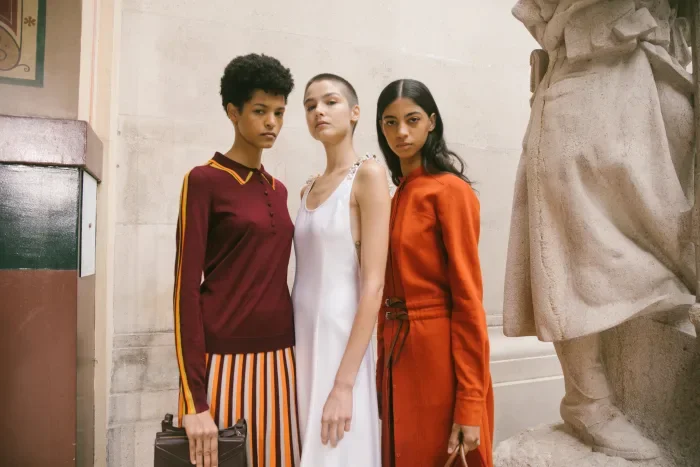
Gabriela Hearst Spring/Summer 2021 Collection, Fashionista
The idea that fashion’s “next big thing” emerges organically — discovered by editors, propelled by Instagram, crowned by celebrity — feels increasingly out of step with reality. In today’s luxury market, momentum is shaped by a triangle of forces: cultural energy, client behaviour and capital allocation. When all three align, a brand scales. When one is missing, even the most compelling idea can stall.
Start with the market context. According to Bain & Company, the global luxury-goods sector entered a period of consolidation in 2024, posting a rare dip after years of growth. 2025 is expected to remain largely flat, signalling the end of easy expansion and the beginning of sharper selectivity. In such an environment, fewer brands can win — and fewer still can afford to rely on momentum alone.
At the same time, consumer behaviour has shifted. High-spending clients are more cautious and more intentional, gravitating towards categories that feel either enduring or experiential. Jewellery, beauty and fragrance have shown relative resilience, as have travel-linked and experience-led forms of luxury, while some traditional ready-to-wear segments have softened. As The Business of Fashion and Bain both note, demand is no longer evenly distributed; it is increasingly polarised around brands that feel distinctive, credible and worth returning to.
Geography further complicates the picture. Growth is no longer driven solely by Europe, the US and China. The Middle East, Southeast Asia, India and parts of Africa are expanding the luxury addressable market, reshaping tastes and redefining where relevance is forged. For brands, this means localisation is no longer optional — and neither is the capital required to act on these shifts quickly.
Which brings us to capital. Investment arms and strategic backers don’t just fund growth; they decide which ideas are given the infrastructure to scale. A brilliant brand without capital can remain niche indefinitely, while a competent one with backing can be amplified into inevitability. In a slower market, capital allocation has become both gatekeeper and accelerant.
For founders and creative directors, the implications are stark. Design talent alone is no longer enough. Brands must be built as cultural propositions and businesses — able to flex across categories, geographies and audiences. The encouraging note is this: when used thoughtfully, backing doesn’t have to flatten creativity. In the best cases, it can de-risk experimentation, support regional voices and give craft-led brands the time and space to grow on their own terms. In a consolidating industry, that may be the most radical luxury of all.
Reading the Names Behind the Brand
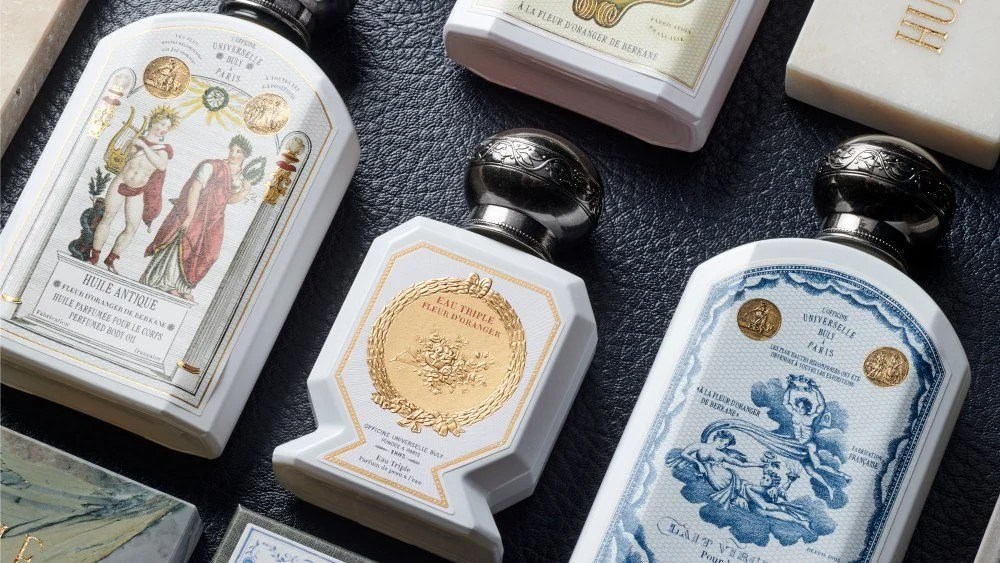
Officine Universelle Buly 1803 Perfumes, WWD
The mechanics of luxury are rarely visible at the point of purchase. On the shop floor, or scrolling online, what we encounter feels organic: a new knitwear brand appears in a pristine mall, a formerly niche label suddenly populates every algorithm, every editor’s pick, every city at once. It reads as momentum. Often, it is orchestration.
Behind many of these moments sits an invisible hand — not creative direction, but capital. Investment arms, strategic stakes and quiet minority holdings shape which brands gain oxygen and which remain cult, circulating just beyond the mainstream. Money, in luxury, does not merely follow taste; increasingly, it amplifies it. Distribution accelerates, retail footprints expand, narratives harden into inevitabilities.
For consumers, this reframes how we read fashion. The distinction between “discovered” and “backed” is no longer straightforward, and perhaps never was. What feels like organic cultural ascent may also be the result of deliberate scaling: supply-chain access unlocked, flagship leases secured, visibility bought and sustained. None of this negates design talent or cultural relevance. But it does complicate them.
For brands, the implications are sharper still. Success today depends not only on clarity of vision, but on alignment — with clients whose spending habits are shifting, with cities rising and falling in influence, and with capital that decides which ideas are allowed to grow legs. Creativity has not lost its power, but it increasingly operates within systems that reward scalability, margin resilience and strategic fit.
So the next time a label seems suddenly unavoidable, the question is no longer simply: Do I like this brand? It is: who decided I should be seeing it this much, right now? In a decade where taste, technology and money are more entangled than ever, learning to read the names behind the brand may be as essential as reading the label itself.
