Dressed for the Runway, Undressed for the Office
Lagos the Fashion Capital — Corporate Nigeria Missed the Memo
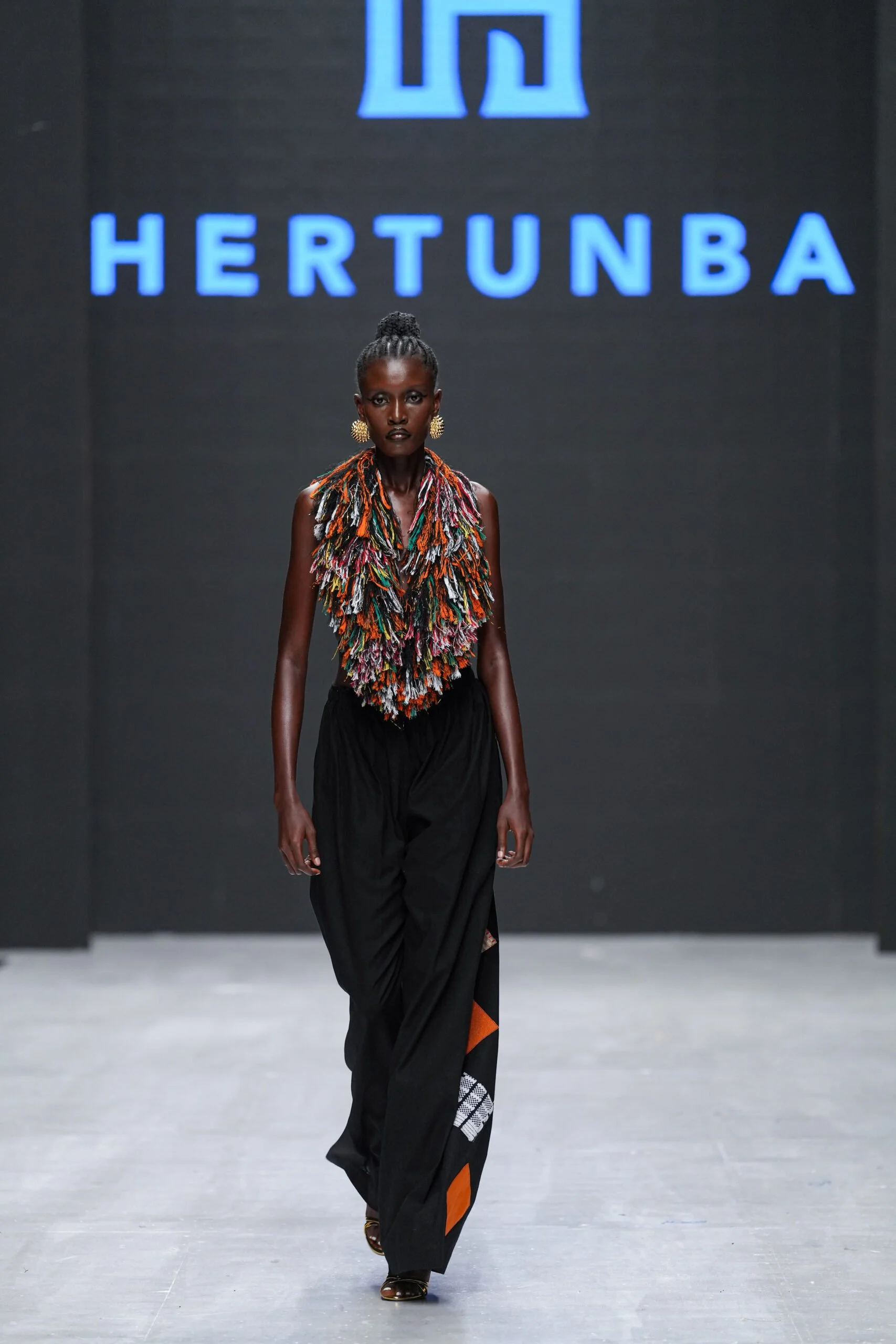
Hertunba for Lagos Fashion Week 2024, BellaNaija Style
I’ve written ad nauseam about the fact that Lagos is a rising fashion capital. Anyone paying attention knows this by now. The designers, the craftsmanship, the runway moments, the global validation — Lagos has earned its place in contemporary fashion discourse. And yet, for all that creative progress, many people in Lagos still can’t walk into the office wearing Ankara without being subjected to the mother of all side-eyes.
Yes, really.
The same Nigerian prints that are applauded on runways, splashed across glossy editorials, and exported as symbols of African creativity are quietly deemed unprofessional the moment they cross the threshold of the workplace. Particularly in the finance sector. Banks. Consulting firms. The Big Four. Corporate law. In the top institutions, the rule is largely the same. Suit, shirt, muted palette, performance of seriousness. Native prints need not apply.
Which raises an obvious question: how can a city that positions itself as a fashion capital still demand that its professionals dress as though creativity and competence are mutually exclusive? How is it that Ankara is good enough for international runways, but not serious enough for a boardroom in Victoria Island?
That contradiction — between what Lagos celebrates publicly and what it polices privately — is not just ironic. It’s outdated, intellectually lazy, and long overdue for interrogation.
Professionalism According to the Colonial Handbook

Men’s suit, President Tailors
The de facto uniform of finance and corporate Nigeria is instantly recognisable: Western suits, muted colours, buttoned-up shirts, pencil skirts. It’s a dress code so rigid that any deviation is quietly, sometimes aggressively, policed. Native fabrics, prints, or silhouettes are typically confined to “Casual Fridays”—a framing that is revealing in itself. Outside that narrow concession, the only people permitted to wear native attire without scrutiny are the most senior figures in an organisation. Power, it seems, is what makes tradition respectable.
The underlying assumption is blunt and stubborn: Western clothing signals professionalism; native clothing is too casual, too expressive, too unserious for “serious” work. And it bears repeating—this idea is not indigenous to Nigeria.
Under British colonial rule, Western dress was a deliberate marker of authority. The suit communicated bureaucracy, governance, and legitimacy. Indigenous modes of dress were tolerated socially but deliberately excluded from “official” spaces. Access to education, employment, and institutional power required visual conformity. You quite literally had to dress like the system to be recognised by it.
What’s more frustrating is how thoroughly this logic has been internalised. More than sixty-five years after independence, it continues to shape Nigerian corporate norms with surprisingly little interrogation. We have managed—slowly and imperfectly—to question other colonial inheritances. Eurocentric beauty standards, for instance, haven’t disappeared, but they no longer carry the same unquestioned authority. There is at least some recognition now that a woman should not have to chemically fry her hair, or permanently disguise her natural texture under wigs and weaves, to be considered employable.
Yet when it comes to clothing, the office remains frozen in time.
No one seems particularly curious about why a heavy suit worn in thirty-five-degree heat is automatically deemed more “professional” than a well-tailored native outfit—one designed for this climate, this context, and this body. Discomfort is still mistaken for discipline. Mimicry is still rewarded as credibility. And the idea that professionalism might look local is treated as mildly radical, instead of patently reasonable.
At some point, the question stops being why this standard exists, and becomes why it continues to be defended so fiercely.
Sacred on Sunday, Suspicious on Monday
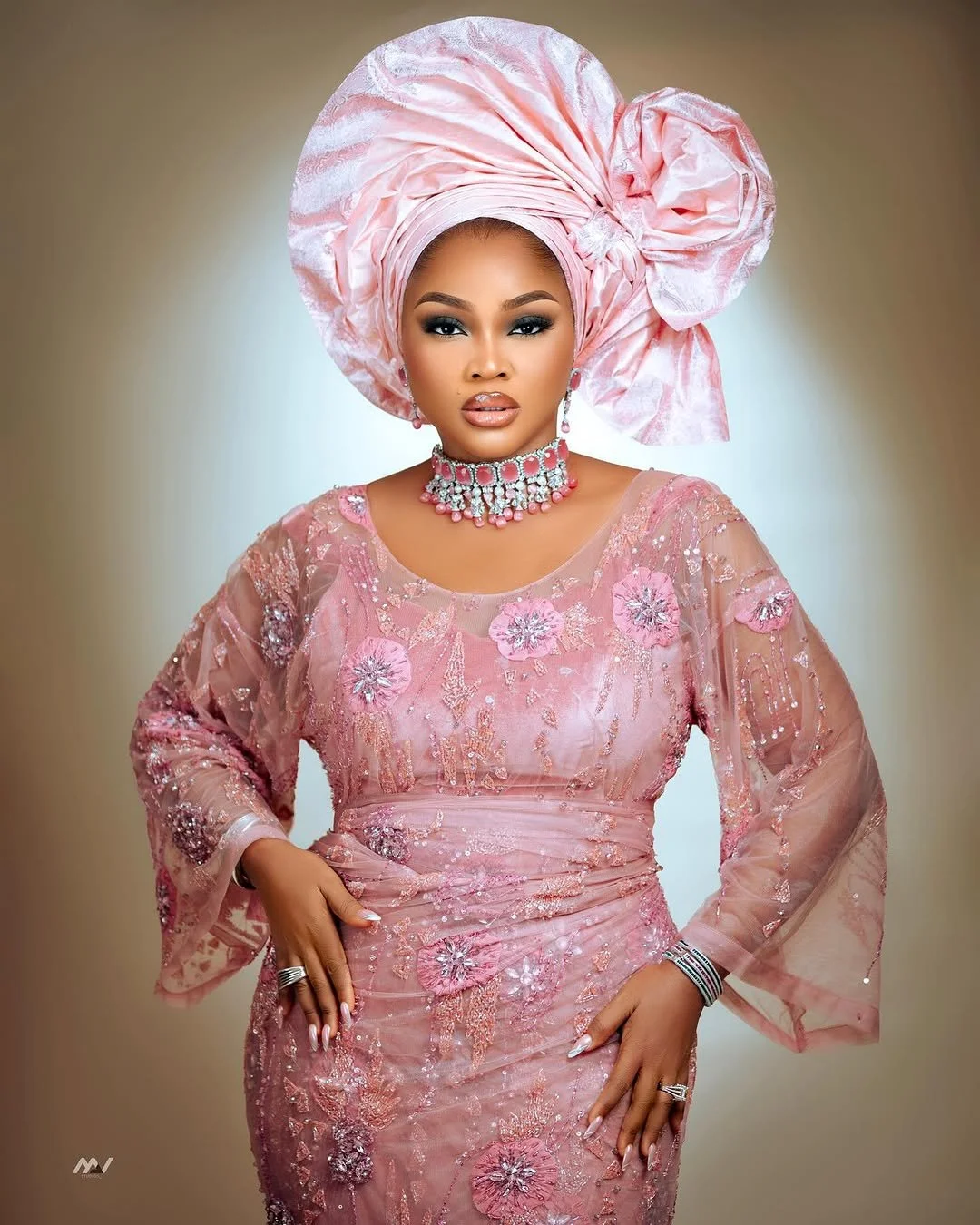
Ìró and bùbá with gèlè, BellaNaija Style

Àgbàdá, Kachins Couture
Obviously, native attire is respected in Nigeria — and not in a small way. It’s practically the dress code for any moment that carries real emotional or cultural weight. At weddings, traditional and Western, people turn up in fabrics so rich they could double as heirlooms. In churches, mosques, and other religious spaces, Sundays look like curated exhibitions of embroidery, dyeing traditions, and master tailoring. And at state functions or diplomatic events, our politicians glide in wearing gorgeously constructed àgbàdá and exquisitely woven aṣọ-òkè, fully aware that these garments project authority, identity, and pride.
In every one of these spaces, Nigerian attire isn’t merely allowed — it’s celebrated, photographed, archived, admired. It is a symbol of dignity.
And then somehow — somehow — the same clothes become “inappropriate” the moment you step into an office building, especially in finance. It’s absurd. The garments we reserve for our most sacred, ceremonial, prestigious moments suddenly get downgraded to “unprofessional” because someone decided that professionalism must look like a heat-trapping suit imported from a completely different climate and culture. The cognitive dissonance is almost insulting.
Of course, some traditional pieces are too formal for day-to-day corporate life. No one is arguing that ìró and bùbá belong in a quarterly budget review. Gèlè — those magnificent architectural feats — are absolutely not designed for open-plan offices or tight headsets. And àgbàdá? It’s ceremonial menswear, practically a royal uniform. Wearing it to a typical workday would feel like showing up in full gala attire.
But the fact that some traditional garments are too dressy should not magically justify the sweeping assumption that all Nigerian attire is unfit for the office. That’s the part that’s genuinely maddening. Instead of recognising that our fashion has layers — casual, formal, business-appropriate, everything in between — corporate Nigeria treats the entire category as if it’s one big flamboyant costume. It’s a failure of imagination, yes, but also a quiet, persistent discomfort with seeing Nigerian identity in spaces associated with money, power, and seriousness.
And that discomfort says a whole lot more about the workplace than it does about the clothes.
Sweating for Credibility

Àdìrẹ jumpsuit, Ankara.com
The fixation on Western corporate dressing becomes even more baffling the moment you factor in Lagos’s climate. This is a city where heat doesn’t merely warm the air — it saturates it. Humidity clings, the sun presses down, and the atmosphere seems permanently set to “slow roast.” Yet the corporate uniform remains a full suit: lined jackets, stiff collars, heavy fabrics, and ties that exist purely to restrict airflow. In thirty-five degree weather, insisting on wool-blend tailoring feels less like professionalism and more like a bizarre endurance challenge.
And while offices aim to be fully air-conditioned, that comfort isn’t exactly guaranteed. Anyone who’s spent time in Nigeria knows that power outages are not an occasional surprise — they’re a recurring part of the national rhythm. A building’s generator might hesitate; an AC unit might falter under strain; a cooling system might cycle on and off depending on load. The result is a workspace where temperatures fluctuate unpredictably, and the people dressed for a temperate London afternoon are left to quietly boil.
What makes this even more ironic is that the fabrics corporate Nigeria turns its nose up at — àdìrẹ, Ankara, aṣọ-òkè, lightweight cottons and linens — are specifically designed for West African heat. They breathe. They move. They honour the climate as much as the culture. Traditional silhouettes aren’t simply decorative; they are the product of generations who understood what it meant to live and work in this environment.
Instead of embracing clothing that is both climate-appropriate and culturally meaningful, corporate Nigeria clings to a dress code built for a completely different hemisphere. It’s an aesthetic imported from places where “hot” means twenty degrees and a polite sun. Meanwhile, native attire sits on the sidelines — functional, elegant, and perfectly suited to reality — while people voluntarily swelter in layers.
So yes, there’s a certain comic tragedy to it: an entire workforce silently sweating for the sake of colonial aesthetics.
Former Colonies, Fully Dressed
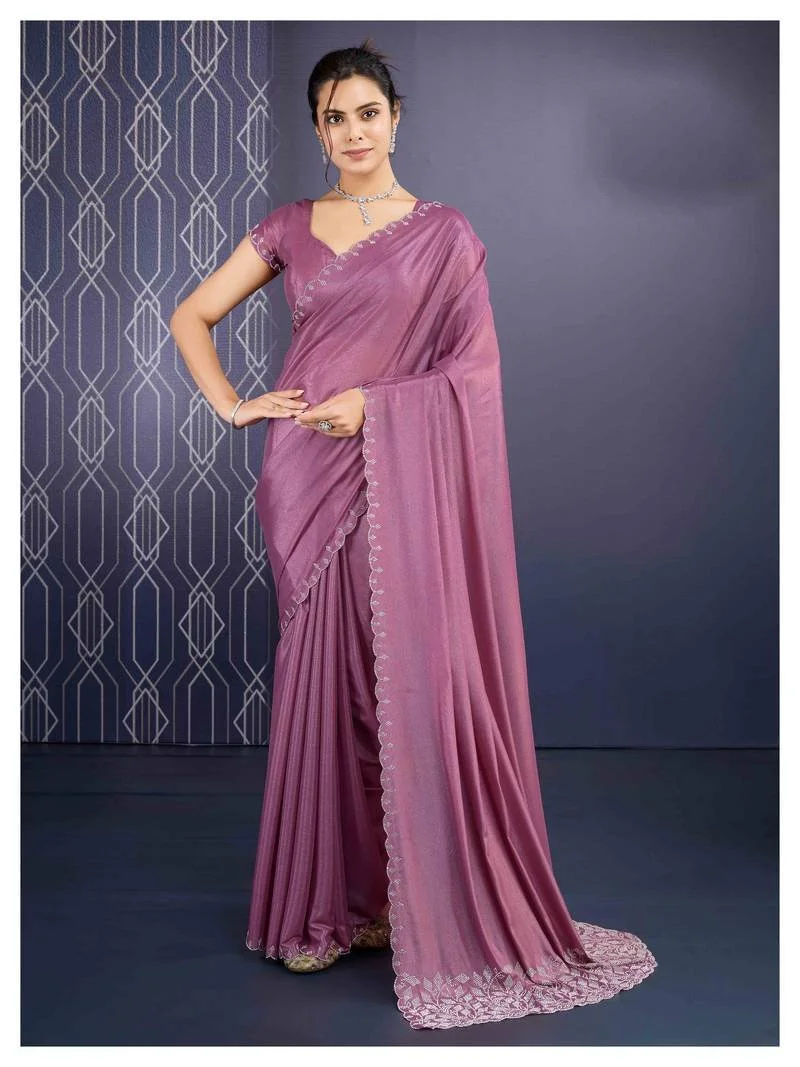
Georgette saree, Vogue Vocal
Here’s another reason this aversion to native clothes feels so bizarre: we’re not the only country with a colonial hangover — but we might be the only one still dressing like we’re afraid of our own reflection.
Across South and Southeast Asia, nations with just as much colonial baggage have somehow managed to evolve past the idea that professionalism must look Western. In India, it’s perfectly normal to walk into a bank or corporate office and see men in crisp kurtas and women in elegant sarees. Nobody clutches their pearls. Nobody assumes competence has evaporated because the fabric isn’t wool-blend and navy. It’s simply accepted that Indian professionalism can look Indian.
Indonesia? Same story. Batik shirts and kebaya are not only common in workplaces — they’re often required for formal government functions. In the Philippines, the Barong Tagalog — a sheer, embroidered, beautifully structured piece of traditional clothing — is considered business wear for men. No one mistakes it for “casual Friday.” And in Vietnam, the áo dài is worn in offices, schools, diplomatic settings — a national uniform that carries both prestige and practicality.
Now here’s the part that matters: What do India, Indonesia, the Philippines, and Vietnam all have in common?
Not only do they also have similar climates to Nigeria, they’re also former colonies.
India under the British.
Indonesia under the Dutch.
The Philippines under Spain and then the United States.
Vietnam under France.
Colonised by the white man. Ruled, reshaped, dictated to.
Just like us.
And yet — and this is the part that stings — none of these countries sneer at their own traditional attire the way corporate Nigeria does. Their national dress has been woven confidently into modern professional identity. Meanwhile, we’re out here policing Ankara like it’s a threat to GDP.
It’s irrational. It’s insecure. And frankly, it’s embarrassing that nations with similar histories have reclaimed their cultural wardrobe while Nigeria still treats its own as an HR violation.
This Is Not a Costume
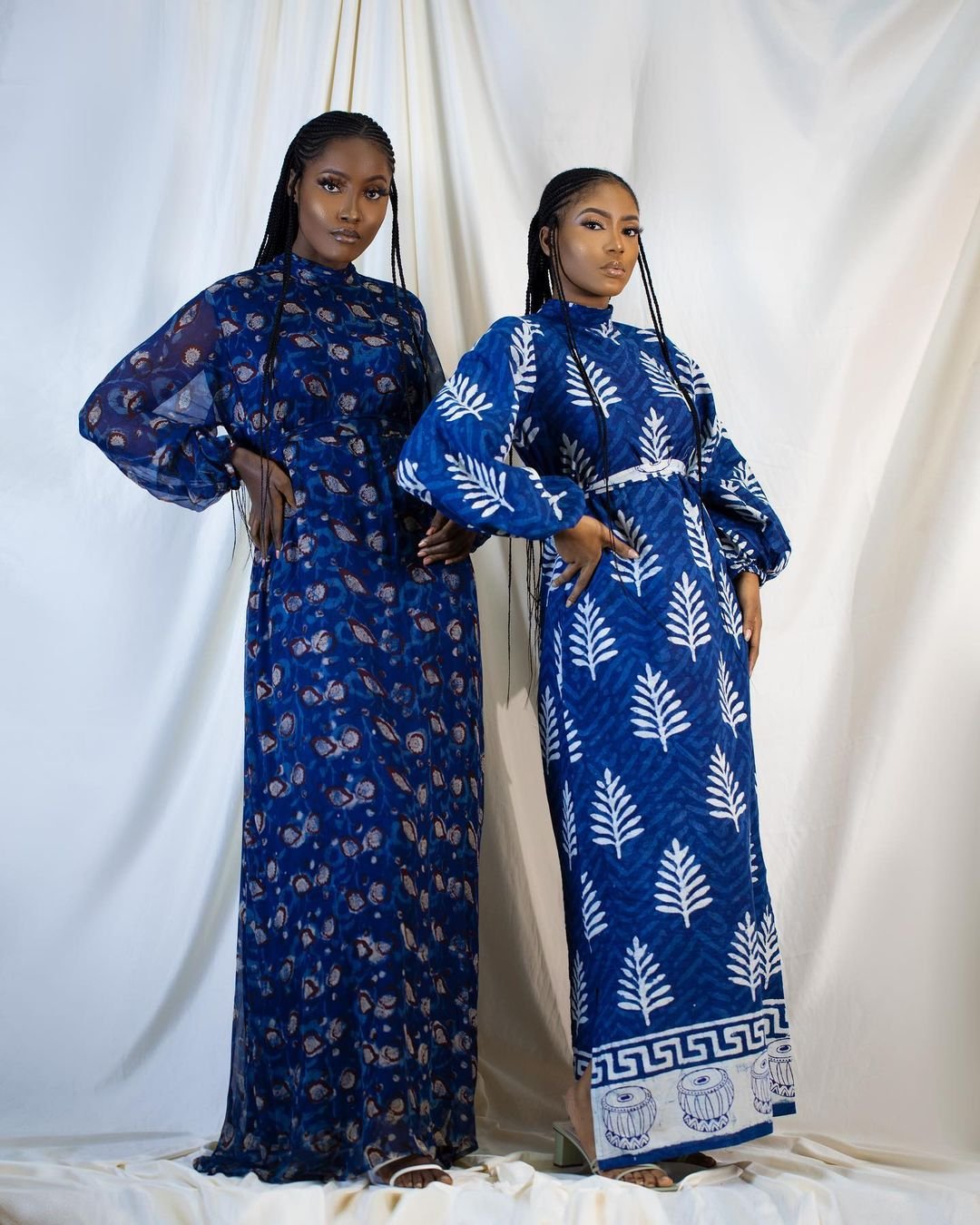
Kancky 2020 Collection "Clarity”, BellaNaija
Allow me to reiterate: I am not suggesting that every Monday should look like a wedding party. This isn’t a call for full ceremonial àgbàdá on the trading floor or aṣọ-ẹbí extravagance at board meetings. Corporate dress codes exist for a reason, and structure matters. What I am arguing for is the simplest, most reasonable thing: a modern, professional interpretation of Nigerian attire — the kind that already exists, but that corporate Nigeria pretends not to see.
Because let’s be honest: we have the designers. We have the tailors. We have the fabrics. Nigerians practically invented the concept of looking polished with personality. Thoughtful, streamlined native wear is not some utopian fantasy — it’s already hanging in people’s closets. Imagine a well-cut kaftan in a muted tone, paired with clean lines and subtle embroidery. Imagine Ankara used sparingly and intelligently, in structured blazers or shift dresses with precise tailoring. Imagine àdìrẹ reinterpreted in minimalist silhouettes. These aren’t difficult concepts. They’re not even new concepts. They’re just concepts that haven’t been granted corporate permission.
Professionalism doesn’t require dullness; it requires intention. And Nigerian designers have been proving for years — on runways, in editorials, in bespoke studios — that native fabrics can be sleek, modern, workplace-friendly, and deeply sophisticated. The tools for a true Nigerian corporate aesthetic are already in our hands. What’s missing is the institutional imagination to take them seriously.
Nigeria could pioneer a corporate style that’s both global and unmistakably ours. But it starts with loosening our grip on outdated rules and admitting the obvious: native wear can be professional when we allow it to be.
If Nigerian Excellence Is Real, It Should Look Like It
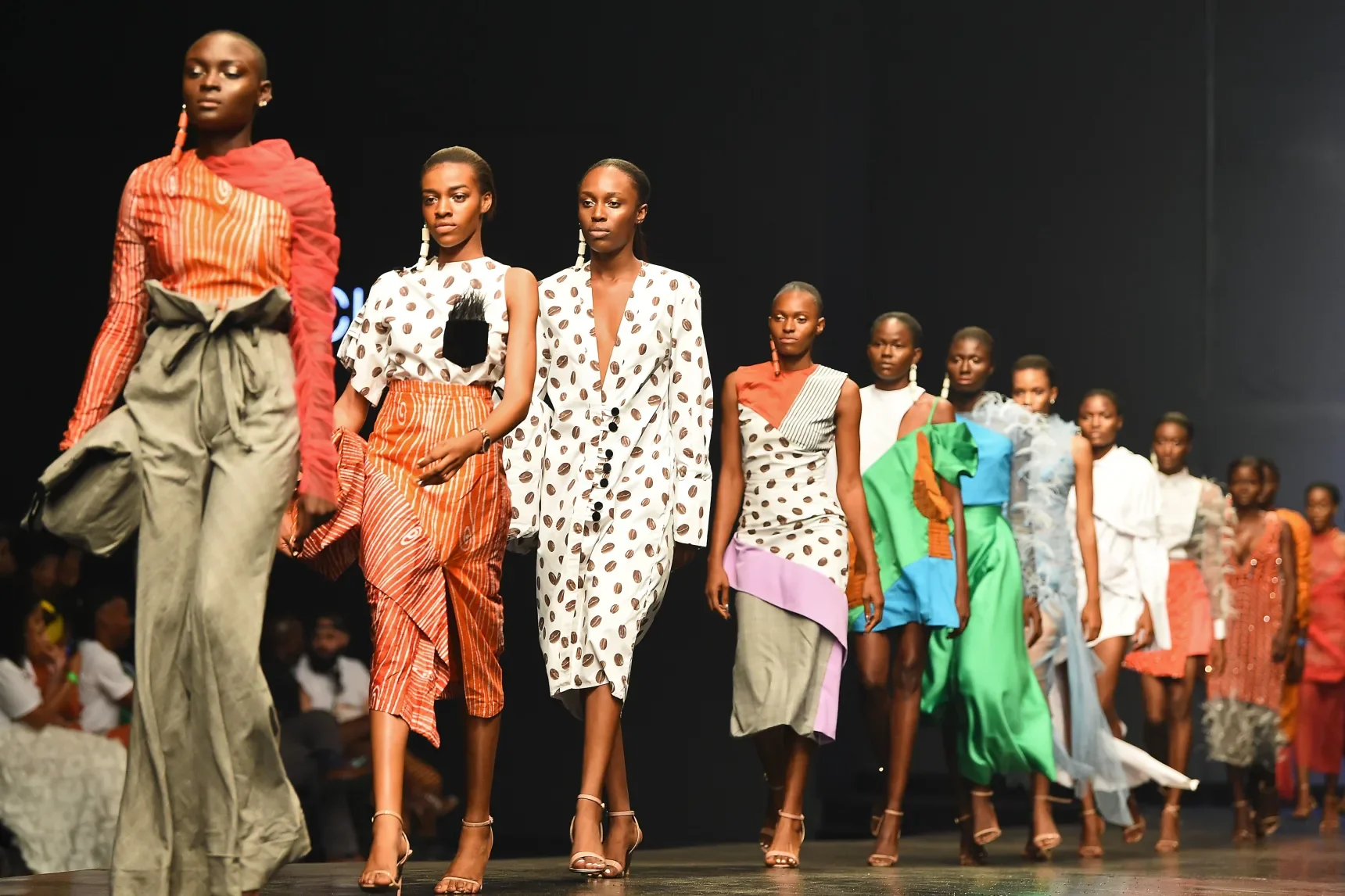
Fruche's Spring 2019 runway show at Lagos Fashion Week, Fashionista
At the end of the day, this is the part I can’t get past: Lagos cannot claim to be a global fashion capital while its offices behave like cultural gatekeepers from 1962. You can’t celebrate Nigerian designers on international runways, applaud the creativity of our artisans, hype Lagos Fashion Week, and then turn around and declare that the same fabrics, silhouettes, and craftsmanship are somehow unfit for the boardroom. That contradiction isn’t just annoying — it’s embarrassing.
Because if corporate Nigeria truly believes in Nigerian excellence, then surely it has to look like something. Excellence isn’t only about GDP, quarterly earnings, or market share. It’s also about identity, expression, and confidence. It’s about a nation that doesn’t flinch when asked to show who it is. And right now, our corporate dress codes flinch. Hard.
The truth — the quiet part said out loud — is that our rejection of native corporate wear has very little to do with professionalism and everything to do with insecurity. A lingering belief that “seriousness” has a European silhouette. A fear that embracing our own aesthetic somehow diminishes our global credibility. It’s absurd, yes. But more than that, it’s revealing. It exposes the gap between how we want to be seen and how willing we are to see ourselves.
So here’s the challenge. To employers: rethink the rules. Make space for a corporate culture that actually reflects the country it operates in. And to young professionals: question every inherited norm that tells you your identity must shrink for you to be taken seriously.
Lagos deserves better than this contradiction. Nigeria deserves better. And honestly? We should dress like we know it.
