Borrowed, Branded, and Sold Back
Collaboration Under Duress
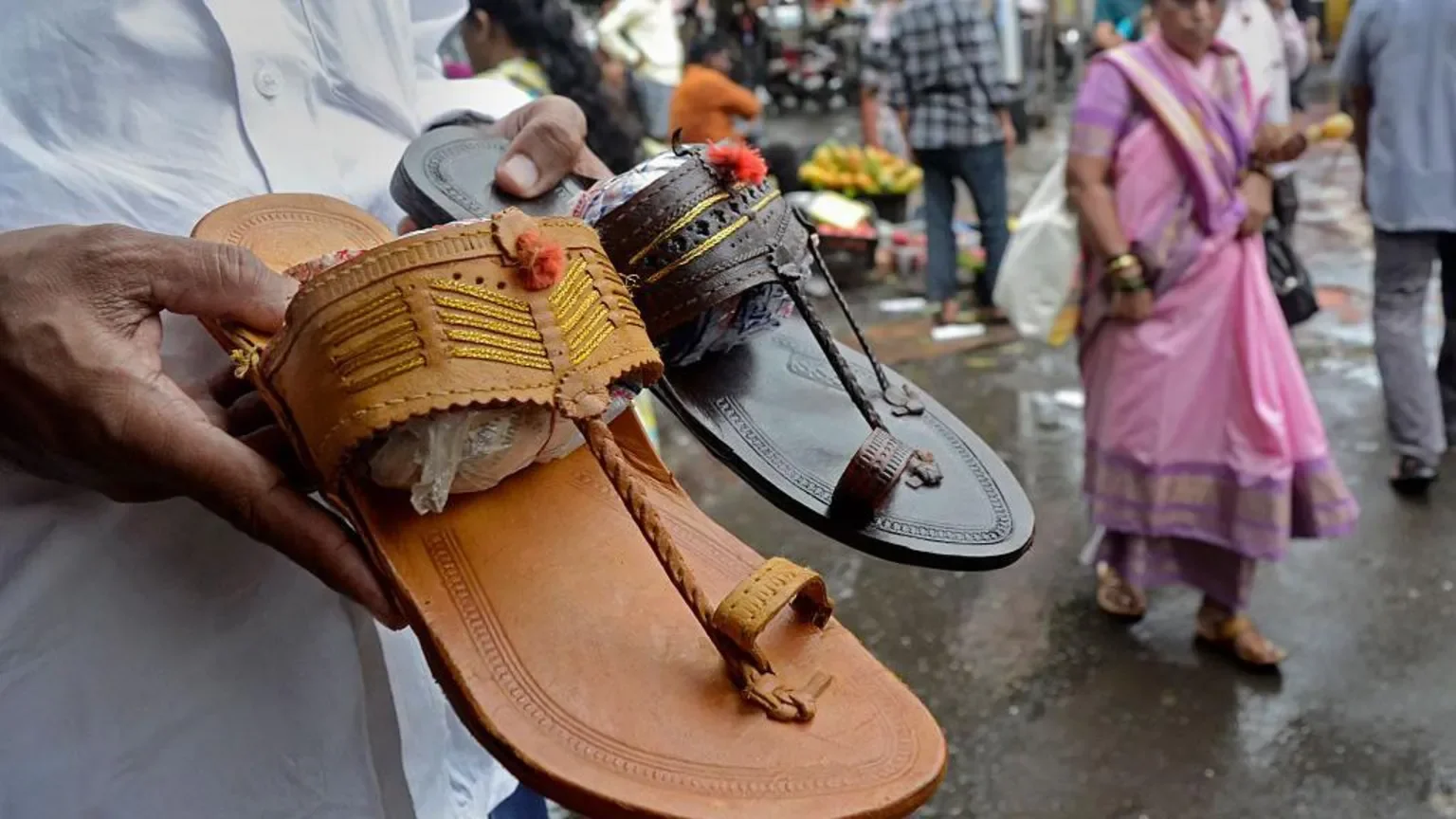
Kolhapuri Chappals, BBC
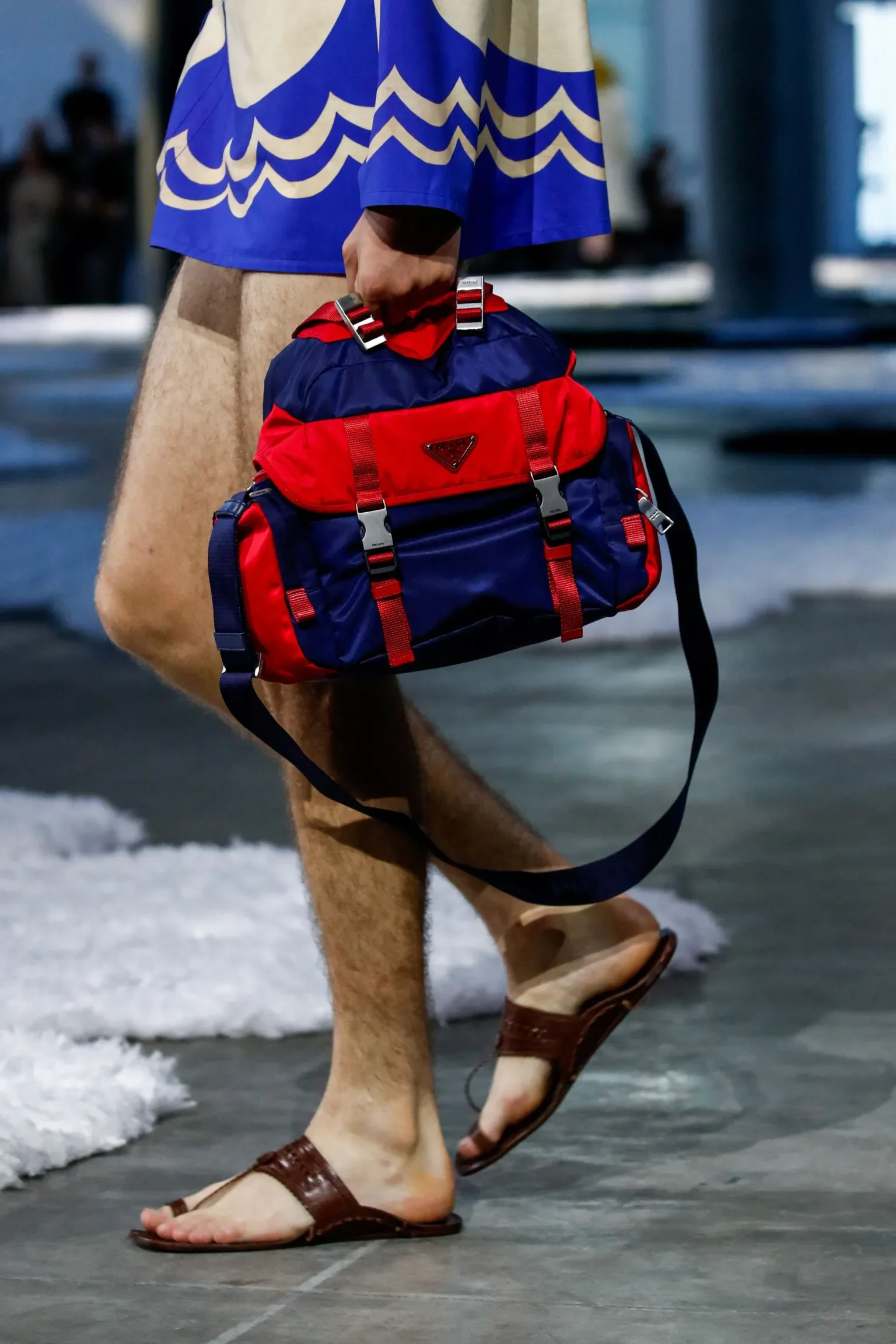
Prada’s braided toe sandal, BBC
At the end of last year, Prada announced it would collaborate with Kolhapuri artisans on a limited-edition sandal collection, scheduled for release in February 2026. On paper, this is the sort of thing luxury loves to present as progress: heritage craft, ethical production, cultural preservation — a neat little bow tied around the values consumers claim to care about: sustainability, transparency, social responsibility.
But context is everything. And Prada’s collaboration isn’t proactive — it’s reactive.
Last June, during Milan Fashion Week, Prada sent a braided leather toe-loop sandal down the runway that was almost identical to Kolhapuri chappals, a traditional Indian craft dating back to the 12th century, protected under Geographical Indication (GI) status since 2019. Yet Prada initially made no reference to India, Kolhapur, or the makers behind the design. Instead, it sold its version for roughly €800–€1,000, or $930 - $1,200.
Authentic Kolhapuris are typically sold in India for around ₹1,200, which is roughly $13 or €11. That isn’t a luxury markup. That’s a price jump of well over 5,000% — achieved without credit, collaboration, or compensation. Unsurprisingly, artisans, craft bodies, and GI stakeholders were outraged. Prada was accused of predatory cultural appropriation. As Harsh Goenka, chair of RPG Group, put it bluntly: “Indian artisans lose, while global brands cash in on our culture” (The Guardian, 2025).
Only after sustained backlash did Prada acknowledge the sandals’ origins and announce plans to work with GI-certified makers — a move framed as cultural celebration and uplift. It wasn’t. It was damage control.
And this is precisely the point: Prada isn’t an anomaly. It’s a case study in how cultural appropriation remains rampant in fashion — and how accountability tends to arrive only when reputational risk becomes too expensive to ignore.
Not Sharing, Not Appreciation: A Definition People Keep Pretending Not to Understand
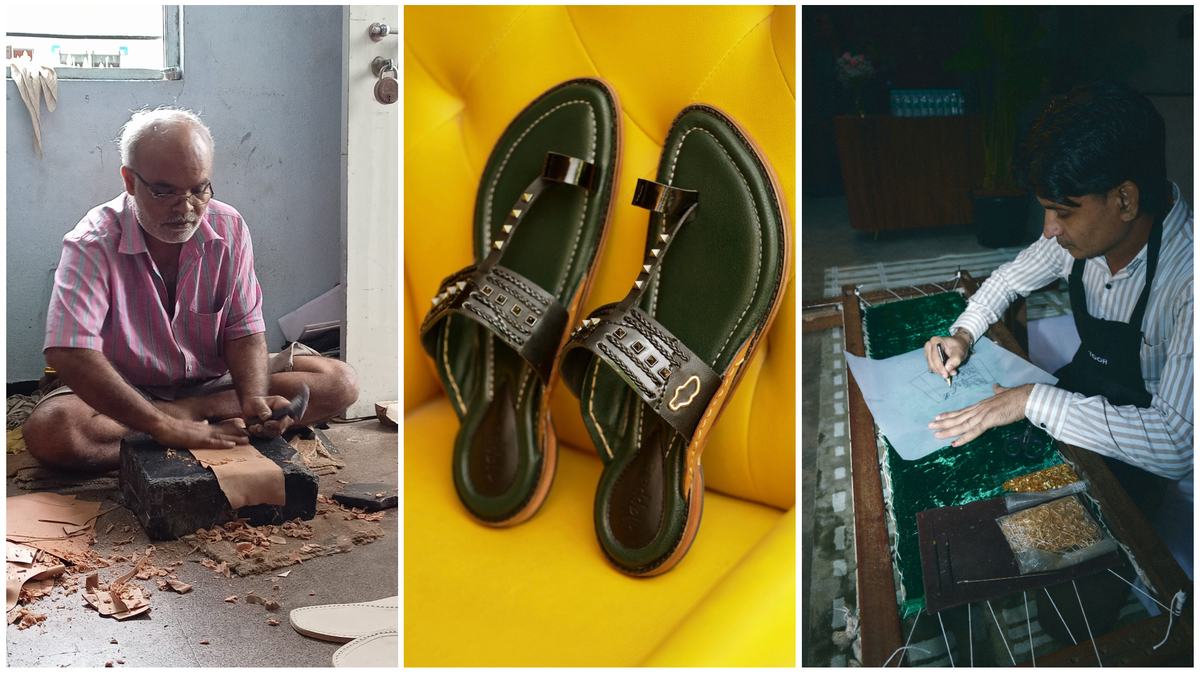
Kolhapuri artisans, The Hindu
Before anyone reaches for the tired “it’s just cultural sharing” defence, it’s worth doing something remarkably unpopular in these conversations: defining the term.
The Oxford English Dictionary defines cultural appropriation as “the unacknowledged or inappropriate adoption of the customs, practices, ideas, etc. of one people or society by members of another and typically more dominant people or society.” That definition matters because it cuts straight through the fog of euphemisms. Three ideas do the heavy lifting: lack of credit, imbalance of power, and harm — economic, cultural, or emotional.
Which is why, no, cultural appropriation is not the same thing as “sharing” or “appreciation,” no matter how often those words are deployed as a conversation-stopper. Genuine cultural appreciation requires consent, context, credit, and compensation — and, crucially, an exchange that happens on something resembling an even playing field.
That’s where Prada failed.
The issue was never that Prada referenced Kolhapuri chappals. Inspiration isn’t a crime. The issue was that a global Italian luxury house — with immense economic leverage, cultural authority, and international reach — monetised a design sustained by a community that has none of those advantages. Prada controlled the pricing, the narrative, the prestige, and the profit. The artisans were invisible until they became inconvenient to ignore.
That dynamic isn’t appreciation. It’s extraction.
What people consistently fail to grasp — or choose not to — is that most cultures are not opposed to exchange. What they object to is being erased, undercut, or exploited. Sharing without consent, without benefit to the source community, and without any balance of power is not sharing at all. It’s taking. And calling it “appreciation” doesn’t make it less so.
It’s Not About Feelings. It’s About Power.
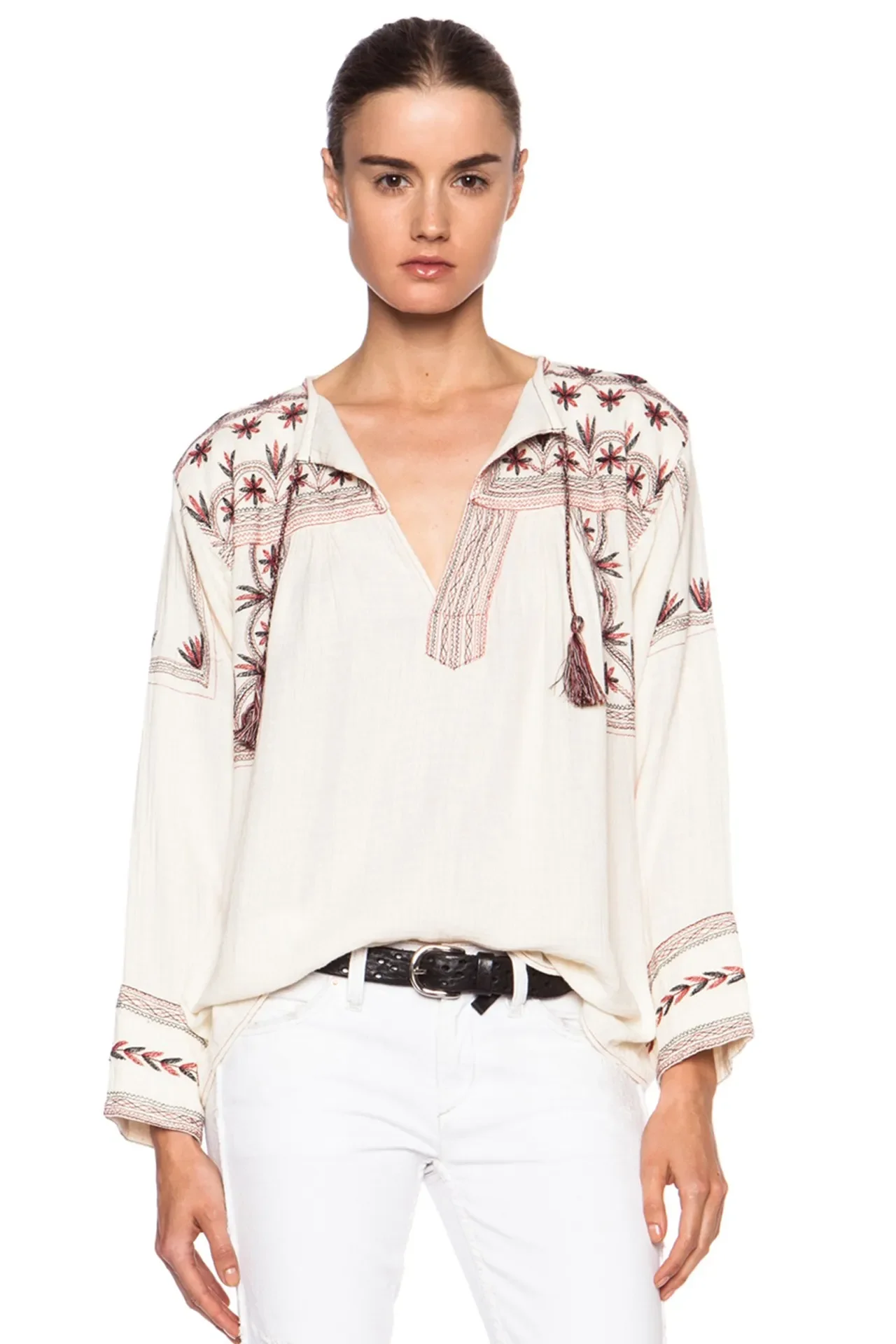
Isabel Marant plagiarised Mixe blouse, British Vogue

Zendaya at the 2015 Academy Awards, Fashionista
One reason cultural appropriation is so easily dismissed is that it’s deliberately trivialised. It’s framed as hurt feelings, oversensitivity, or taste — as though the problem is emotional fragility rather than material reality. That framing is convenient. It lets people roll their eyes and opt out.
So let’s be clear: this is not about feelings. It’s about structure. It’s about power.
Economic imbalance sits at the heart of that power structure. Cultural appropriation in fashion overwhelmingly benefits the appropriating entity, not the source community — and the mechanism is as old as capitalism itself: extraction followed by obscene mark-ups. We’ve already seen Prada inflate the price of a Kolhapuri-inspired sandal by over 5,000%. But this isn’t an anomaly. It’s the model.
Take Isabel Marant’s Spring/Summer 2015 Étoile collection. The indigenous Mixe community of Santa María Tlahuitoltepec in Mexico publicly identified one of her blouses as containing graphic elements specific to their traditional dress. The Tlahuitoltepec blouse has more than six hundred years of history. An authentic blouse sells locally for around 300 pesos — roughly $20–$30. Marant’s version retailed for over $200. A mark-up exceeding 500%, with none of that value returning to the people whose culture made the design possible.
This is what racial capitalism looks like in practice: minority culture mined as raw material, stripped of context, then repackaged as luxury while the originators remain invisible. And at this point, pretending not to see the colonial through-line isn’t naïveté — it’s wilful ignorance. These cultural elements are treated as free, ownerless, and endlessly extractable.
Reginald Stewart, Vice President of Diversity and Inclusion at Iowa State University, put it bluntly: “The idea of using someone else’s culture and likeness to sell your product is a legacy of the coloniser mentality — where humans and their artefacts were goods to be bought, traded, exploited and sold” (Iowa State Daily, 2019).
And then there are the double standards — the ones that make it impossible to pretend this is harmless “influence.” When marginalised people wear their own culture, they are penalised, mocked, or excluded. When dominant groups wear the same thing, it’s celebrated, editorialised, and monetised.
Black hairstyles are the clearest example. I still remember Zendaya’s first Academy Awards appearance in 2015 — elegant in Vivienne Westwood, wearing her hair in locs. I also remember Giuliana Rancic mocking her on Fashion Police, saying an eighteen-year-old Zendaya looked like she smelled of “weed and patchouli oil.” What Rancic didn’t mind, however, was praising Kylie Jenner just weeks earlier for wearing locs — calling the look edgy and cool. Same hairstyle. Different wearer. Different response.
And this double standard isn’t new. In 1981, Renee Rogers lost a lawsuit against American Airlines after being disciplined for wearing her hair in cornrows. The court ruled the discrimination wasn’t racial because white actress Bo Derek had worn cornrows in a film — therefore cornrows weren’t a Black hairstyle. Case closed. Never mind Black women who had worn the style for thousands of years. Never mind that they were punished for it while white women were praised.
So no — this isn’t about people being “too sensitive.” It’s about who gets punished, who gets praised, and who gets paid.
Copy–Paste Colonialism: Fashion’s Favourite Bad Habit

Victoria’s Secret Native American outfit, British Vogue

Gucci “Indy Turban”, Teen Vogue
If Prada and Isabel Marant’s controversies felt familiar, that’s because they were. Not spiritually. Not metaphorically. Structurally. Cultural appropriation in fashion isn’t the occasional lapse of judgement — it’s a pattern that has been allowed to repeat itself, season after season, brand after brand, continent after continent.
The script rarely changes.
First comes the denial — or its more polished cousin, creative amnesia. The brand insists the design is coincidental. Universal. Rootless. “Inspired,” but never traceable.
Then comes the language gymnastics. Not copying — referencing. Not appropriation — celebration. Not extraction — homage.
Only when backlash becomes loud enough — once criticism spills beyond fashion Twitter and into mainstream media, shareholder nerves, or government offices — do we reach the apology stage. Carefully worded. Passionately vague. Almost always accompanied by the promise to “do better.”
And crucially: almost never preceded by consultation.
Victoria’s Secret turned sacred Native American headdresses into lingerie accessories, stripping ceremonial items of meaning and reducing them to exotic stage props. The looks were eventually pulled, apologies issued — but not before the damage was done.
Gucci followed with the “Indy Full Turban,” retailing a near-identical version of a Sikh religious garment for nearly $800. A symbol tied to faith, honour, and survival through persecution was reframed as an accessory. The backlash was swift. The product vanished. The explanation followed. The consultation, once again, had not come first.
Adidas released the Oaxaca Slip-On, visually indistinguishable from traditional huaraches handcrafted by Indigenous artisans in Villa Hidalgo Yalálag, Mexico. Outrage escalated so far it reached the Mexican presidency. Adidas apologised — but only after national political pressure made silence impossible.
Dior’s Sauvage fragrance campaign attempted to aestheticise Native American identity, using Indigenous imagery as atmosphere rather than acknowledging it as living culture. The campaign was deleted within hours following condemnation — a quiet admission that it should never have cleared internal review.
Nike has repeatedly faced criticism for lifting culturally specific motifs — often framed as abstract graphics, divorced from origin, meaning, or authorship.
Different brands. Same behaviour.
What connects these cases is not coincidence — it’s corporate confidence. The confidence that cultural heritage is unprotected. That traditional design is public domain. That marginalised communities lack the legal, economic, or media power to challenge billion-dollar companies unless public outrage does the work for them.
Yes, there has been a shift. Adidas’s in-person apology to the Yalálag community in 2025 marked a notable departure from the industry’s usual approach. Public contrition. Direct dialogue. A commitment to collaboration.
But let’s be honest: this wasn’t progress born of enlightenment. It was progress born of pressure.
And an industry that only corrects itself when cornered isn’t ethical — it’s reactive. It doesn’t change behaviour; it manages fallout.
Until consultation becomes standard practice rather than crisis response, appropriation will remain an acceptable risk: a gamble that the “inspiration” will sell before anyone notices where it came from.
Which is why Prada doesn’t represent a turning point. It represents continuity. Different runway. Same script.
Stolen, Sanitised, Sold: Who Pays When Fashion Borrows Culture
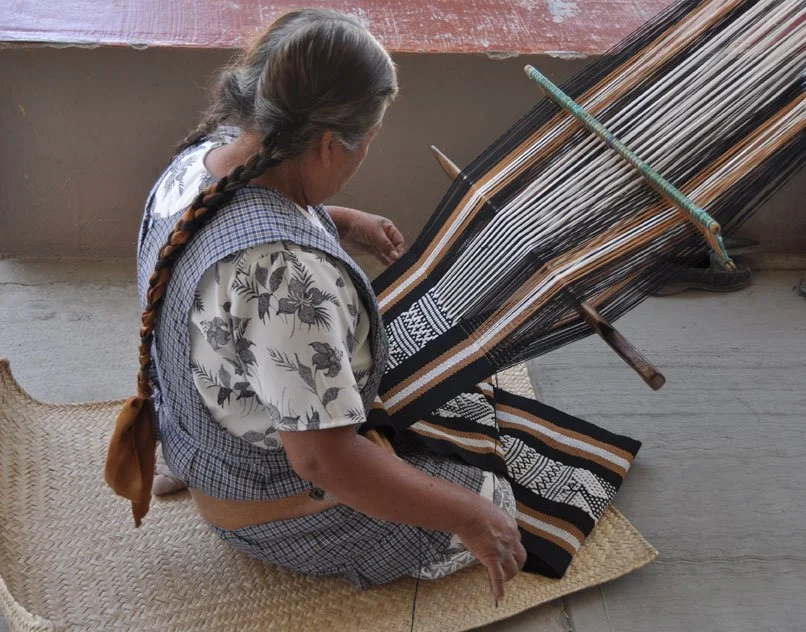
A backstrap weaver from San Tomas Jalieza, Cloth Roads
Let’s drop the euphemisms. Cultural appropriation in fashion doesn’t just bruise egos or spark temporary outrage. It causes material harm — measurable harm: lost income, cultural erosion, and psychological violence.
Economic harm: For many source communities, traditional craft is livelihood. Yet when luxury houses extract cultural design, the originators are cut out of the wealth it generates. A sandal woven by hand for generations becomes a £700 product with no artisan named. A garment stitched by Indigenous women is rebranded as “bohemian” and sold for ten times the price. The originators are neither credited nor paid — they’re replaced.
Worse, once a design is absorbed into the global fashion machine, the market floods with imitations. The original is undercut by the copy. The handmade is drowned out by the factory version. Cultural heritage is rendered economically obsolete by its own popularity.
This isn’t admiration. It’s displacement.
Cultural harm: Traditional clothing and adornment carry history, ritual, resistance and survival. Appropriation hollows that out. Sacred items become silhouettes. Ritual garments become styling tools. Symbols earned through lineage or ceremony become trend fodder — exotic, aesthetic, empty. Once removed from context, these objects are renamed, reinterpreted and reintroduced as something “new.”
That isn’t cultural exchange. It’s cultural amputation.
Emotional harm: Perhaps the most brutal part is this: the people profiting can take it off. The hairstyle can be changed. The jewellery can be removed. The garment can be archived when the trend dies. The people whose culture is being worn do not have that luxury.
As one Native activist put it: “This isn’t fantasy. This is about our cultures, our bodies, and our lives.”
Sikh leaders described Gucci’s turban-style headpiece not as flattering but as offensive. Seeing an article of faith that many Sikhs face discrimination for wearing reduced to a pricey accessory wasn’t empowering. It was humiliating.
That is the core injustice: dominant groups get novelty without consequence. Marginalised groups carry stigma without choice. The same symbols that invite ridicule or discrimination in one context become “editorial” in another.
That isn't a coincidence. It's a hierarchy.
Over time, appropriation does what colonisation always sought to do: it disconnects people from ownership of their own identity. So when critics wave this away as “not that serious,” what they’re really saying is that someone else’s loss is acceptable collateral for aesthetic pleasure.
For the communities left behind, the consequences aren’t abstract. They’re economic precarity. Cultural erosion. The quiet violence of watching your heritage celebrated everywhere — except by the people who created it.
We’ve Been Over This — But Let’s Say It Again for the People in the Back
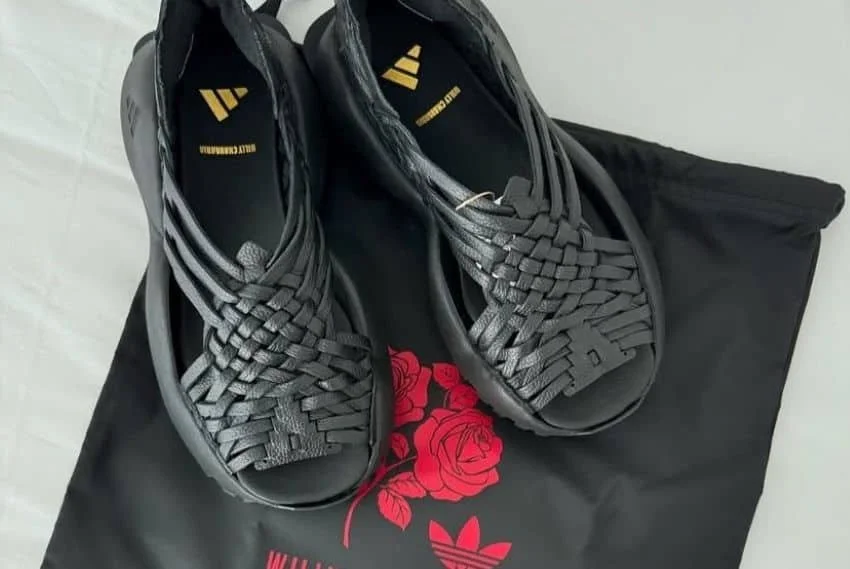
Adidas “Oaxaca slip-on” sandals, Mexico News Daily
By now, this should be obvious. And yet someone will still insist cultural appropriation “isn’t real.” Not because the evidence is lacking — but because pretending not to understand is easier than accepting responsibility.
So, for clarity — and because this argument refuses to die — it bears repeating.
“Culture is meant to be shared.”
Yes. Shared. Not seized. Not monetised. Not renamed and trademarked by multinational corporations. The question isn’t whether cultures influence one another — they always have. The question is who controls the terms of that exchange. Sharing implies consent, dialogue, and mutual benefit. What fashion routinely engages in is unilateral extraction.
When one side profits and the other absorbs the harm, that isn’t sharing. It’s taking — with better branding.
“It’s appreciation.”
Appreciation requires a relationship. You cannot honour people you don’t consult. You cannot claim admiration while excluding the communities you’re borrowing from. Replication without relationship isn’t appreciation — it’s aesthetic tourism.
“No one owns culture.”
This argument loves abstraction because abstraction avoids accountability. No, culture isn’t owned like a patent — but the absence of legal ownership doesn’t mean the absence of harm. Communities live with the consequences when their heritage is distorted, commercialised, or mocked. You don’t need ownership for damage to occur. You need power imbalance.
“It’s just fashion.”
Fashion is not neutral. Clothing signals identity, belonging, faith, resistance. It has been used for centuries to police bodies and enforce hierarchies. To pretend fashion is merely decorative is to ignore everything we know about culture.
“Imitation is flattery.”
Only if the people being imitated agree. If a community says a design feels exploitative, degrading, or violating, dismissing that response as oversensitivity isn’t debate — it’s entitlement.
Here’s the part people keep ignoring: intent does not cancel impact. And impact is determined by power. Power decides whose cultural expression is mocked and whose is monetised. Power decides who gets paid and who gets appropriated.
So yes — we’ve discussed this already. And yes — it still needs repeating. Because misunderstanding isn’t the issue anymore. Refusal is.
Protected in Theory, Plundered in Practice: Why the Law Keeps Failing Culture
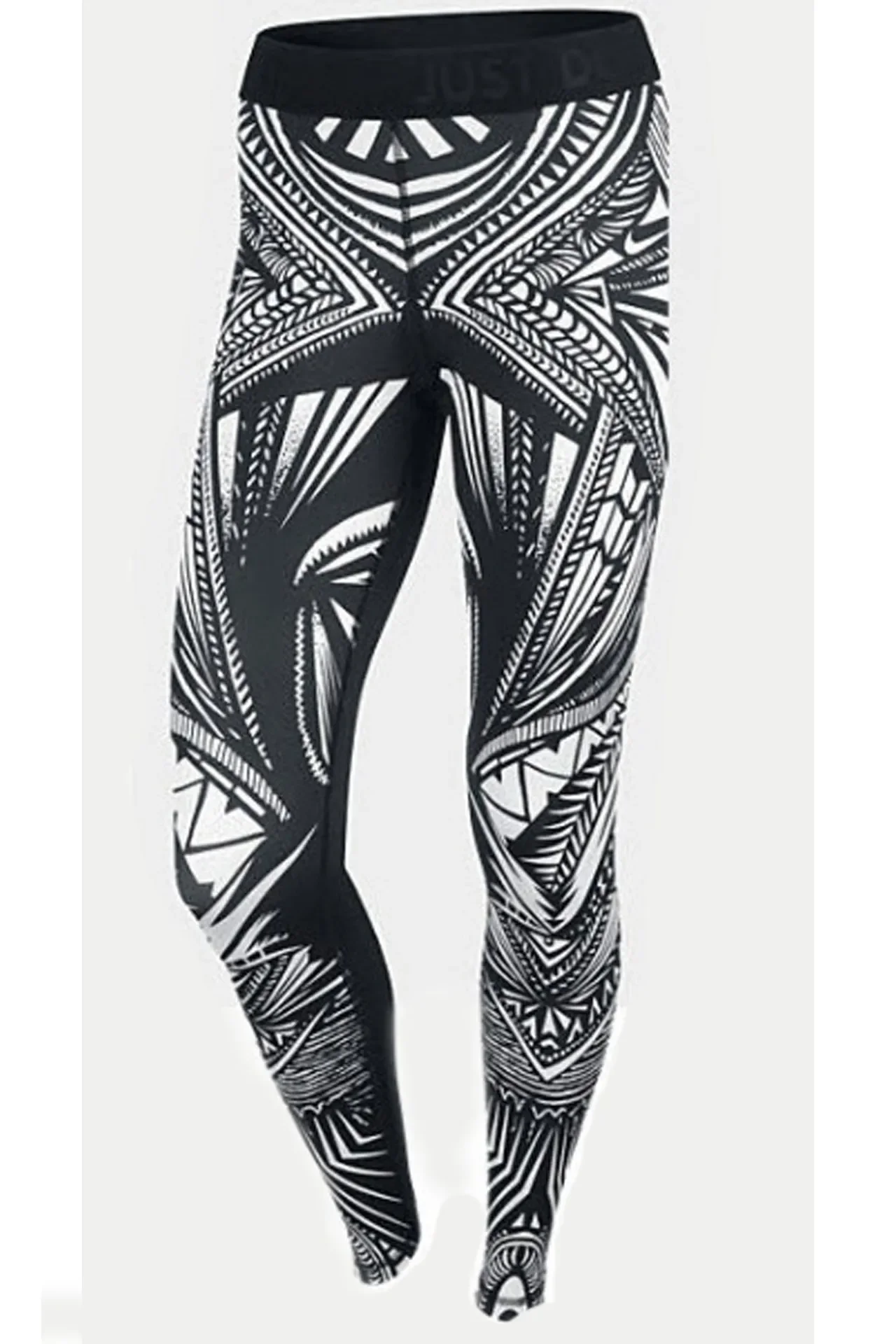
Nike Pro Tattoo Tech Tights leggings, British Vogue
If outrage alone could stop appropriation, the fashion industry would have learned its lesson decades ago. It hasn’t — because moral condemnation doesn’t translate into legal consequence. And without consequence, appropriation remains not just possible, but profitable.
The uncomfortable truth is this: the legal system was never built to protect culture — at least not the kind that belongs to communities rather than corporations.
Geographical Indications (GIs) protect names, not forms. Kolhapuri chappals may be protected as a label — but a brand can reproduce the silhouette so long as it avoids the name. The system recognises geography while ignoring heritage.
Trademarks can help — but only if a community has already trademarked an identity marker. The Navajo Nation case is often cited precisely because it shows how rare actionable protection is: the law didn’t suddenly “protect culture”; it protected a registered term. Most communities cannot trademark centuries of identity in advance.
Certification marks can signal authenticity, but they do nothing to prevent imitation. They inform consumers after the fact; they don’t stop designers beforehand. They protect reputation — not appropriation.
Modern IP law protects individuals. Culture is collective. Traditional designs are intergenerational, evolving, and often treated as public domain — which, in practice, means free for commercial extraction. Enforcement is territorial. Fashion is global. Culture crosses borders effortlessly. Law does not.
So most appropriation scandals never reach court. They follow a depressingly predictable route: backlash, statement, vague apology, product withdrawal, no damages, no precedent, no deterrent. Legal accountability is replaced with reputational management. Brands don’t fear lawsuits — they fear headlines.
Right now, the law doesn’t ask should you use this? It asks can anyone stop you? And far too often, the answer is no.
Respect Isn’t Radical — It’s the Bare Minimum

Canada Goose and Inuit designers collaboration, (Project Atigi), FASHION
After everything we’ve examined — extraction, erosion, double standards, legal gaps — one truth remains: cultural appropriation persists not because ethical exchange is difficult, but because exploitation is easier.
Fashion doesn’t lack the tools to do better. It lacks the will.
Ethical cultural exchange is not theoretical. It exists. It works. And it isn’t complicated — it simply requires structure.
It starts before the sketchbook opens. Serious brands don’t begin with mood boards; they begin with people. Collaboration from the start, not after backlash forces damage control.
If there’s profit, there must be participation. Compensation cannot stop at wages; it must include profit-sharing, royalties, licensing, investment, and long-term opportunity. Anything less is extraction with better PR.
Credit isn’t optional — it’s the floor. Ethical fashion names its sources clearly and proudly. It doesn’t hide behind “tribal” or “ethnic” euphemisms. It attributes cultures as living and authored, not anonymous aesthetic supply chains.
Consultation means listening — including when the answer is no. Some symbols are sacred. Some designs are ceremonial. Some are not meant for commercial use at all. The willingness to walk away from a profitable idea because it crosses a cultural boundary is one of the clearest markers of genuine respect.
And the power shift that changes everything is the simplest: hire designers from within the culture. Not as collaborators-of-the-season. Not as diversity headlines. As creative authorities, with authorship, autonomy, and longevity.
Strip away the statements and the buzzwords, and ethical exchange comes down to a brutal litmus test:
Did the brand respect the culture? credit the community? share the benefits? involve people from within it? Build something that lasts beyond one trend cycle?
If not, no amount of flowery language can save it.
Because appropriation isn’t an accident. It’s a decision — made quietly, repeatedly, and often profitably.
So is ethical exchange.
And fashion’s future won’t be shaped by how loudly brands claim to value culture — but by what they choose to do with their power once the runway lights go out.
