A Very Expensive Lack of Imagination
One House. One Dress. One Huge Disappointment
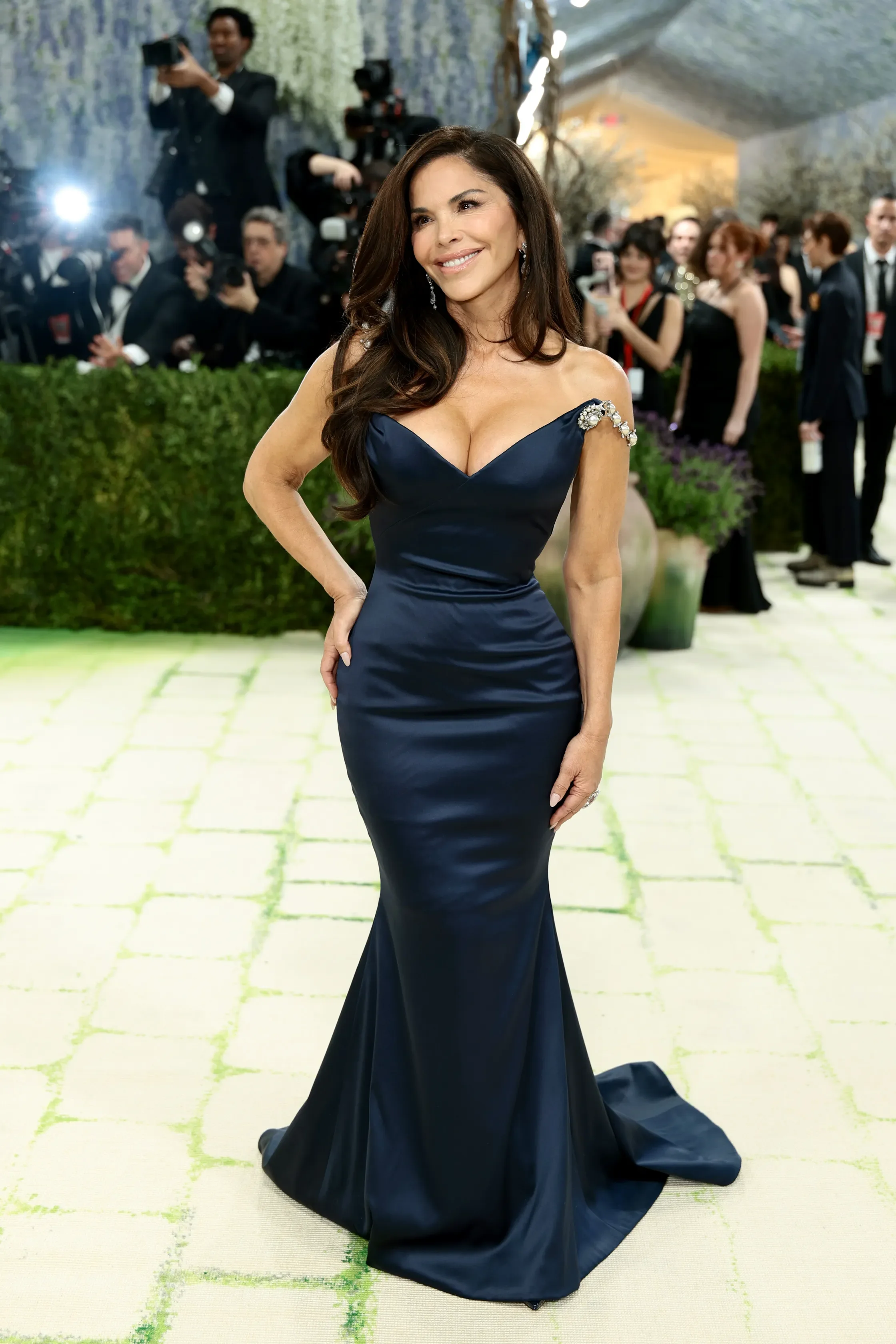
Lauren Bezos in Schiaparelli Haute Couture at the 2026 Met Gala, Vogue
At the 2026 Met Gala, the red carpet was crowded with the usual power players: Saint Laurent, Valentino, Prada, Dior. But Schiaparelli, one of the houses people actually expect to deliver a Met Gala moment, was strangely missing. The reason? Lauren Sánchez Bezos had reportedly secured an exclusivity agreement with the brand. No one else could wear Schiaparelli. And after all that effort, all that expense, and the added advantage of being styled by Law Roach, the man behind some of Zendaya and Anya Taylor-Joy’s strongest fashion moments, Mrs Bezos arrived in a dress that was not ugly, not offensive, not even badly made. Worse. It was boring.
To be fair, the look did technically fit the theme, “Fashion Is Art”. It was inspired by John Singer Sargent’s Madame X, which is displayed in the Metropolitan Museum of Art. The painting was of a young socialite, Virginie Amélie Avegno Gautreau, wife of the French banker Pierre Gautreau. It caused a scandal when it was first painted … in 1884. In 2026, a fitted, off-the-shoulder gown is hardly an act of rebellion. The problem wasn’t that Lauren Bezos looked bad. She didn’t. The problem was that she had exclusive access to Schiaparelli and yet somehow produced a look with all the danger of a tasteful charity dinner. If you’re going to block everyone else from wearing Schiaparelli, the result needs to justify the monopoly. This did not.
And that is why the disappointment matters beyond one dress. As an honorary chair and lead sponsor, Lauren Bezos was one of the public faces of the night. The expectation was not simply that she could access haute couture. We already knew that. The expectation was that she understood what to do with it. Instead, the look exposed something much bigger: exclusivity is turning fashion into hoarding, and the Met Gala is drifting from cultural fantasy into billionaire branding.
The House That Understood the Assignment
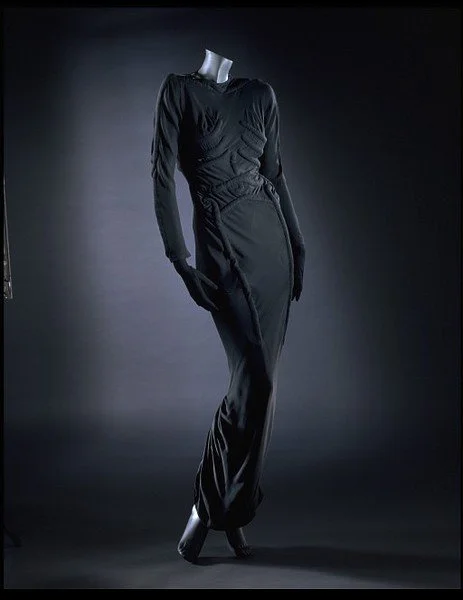
Skeleton Dress by Elsa Schiaparelli and Salvador Dalí, 1938, Fashion History Timeline
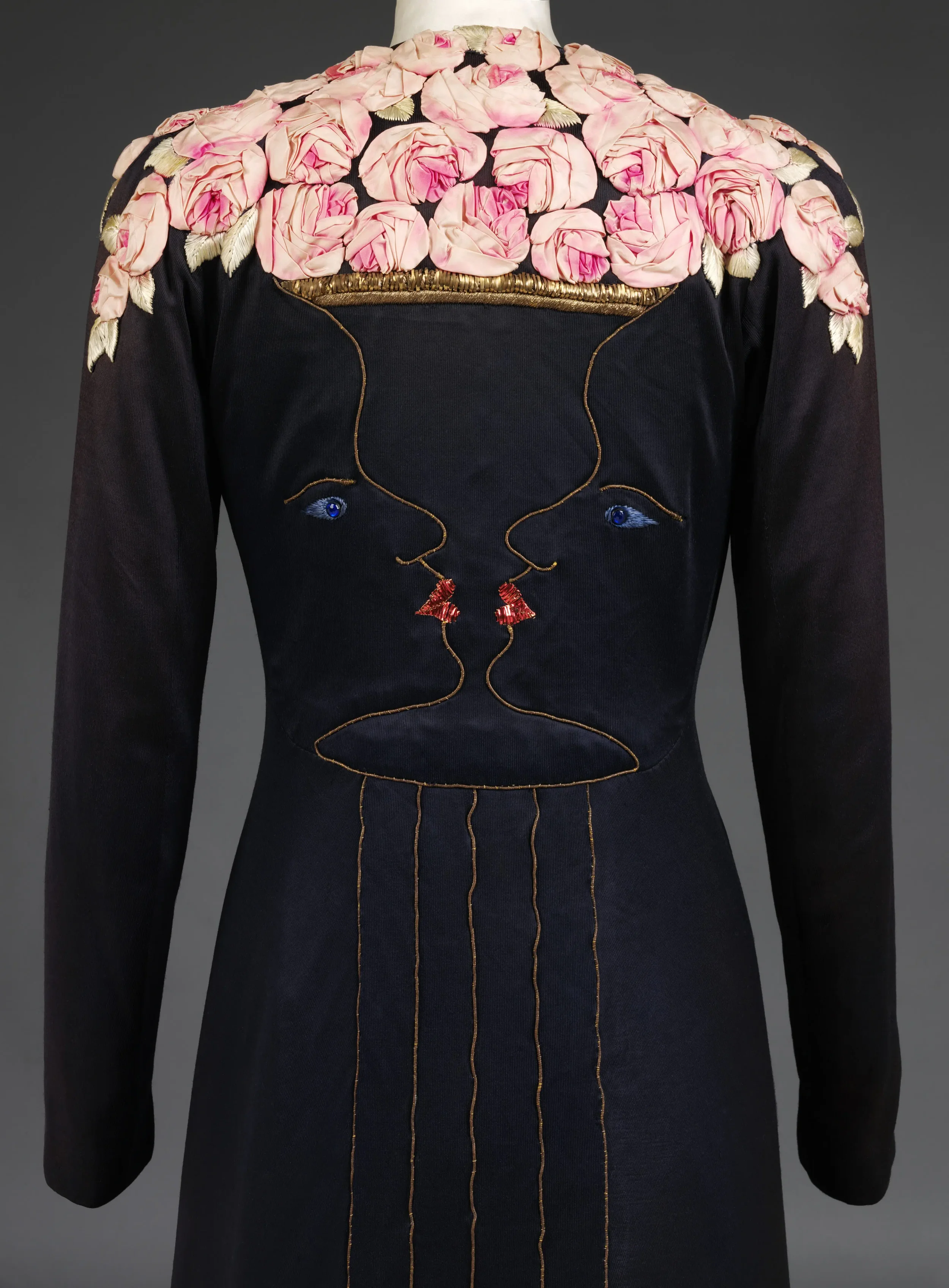
Evening Coat by Elsa Schiaparelli and Jean Cocteau, 1937, V&A Americas Foundation
Schiaparelli isn't just one of the most anticipated houses at each Met Gala. For a theme like “Fashion Is Art”, it should have been the obvious choice.
Elsa Schiaparelli built the house on the idea that clothes could be more than beautiful. They could be strange, funny, grotesque, intelligent, even scandalous. In the 1930s, she helped drag haute couture into conversation with Surrealism, one of the defining avant-garde movements of the 20th century. Her collaboration with Salvador Dalí produced some of fashion’s most infamous images: the 1937 Lobster Dress, the 1938 Skeleton Dress, garments that did not simply decorate the body but made the body feel uncanny. A year before that, her shorter partnership with Jean Cocteau produced its own visual tricks: a black evening coat with two embroidered profiles forming a vase of roses in the negative space, and a grey linen jacket whose embroidery creates the illusion of a woman’s profile, her hair spilling down the sleeve.
That is the point of Schiaparelli. It has never been interested in clothes as polite luxury. The house treated fashion as visual art, social mischief and a very expensive inside joke.
Daniel Roseberry, who became creative director in 2019, understood the assignment. His Schiaparelli revived the house by turning its Surrealist codes into modern spectacle: exaggerated anatomy, sculptural silhouettes, gold body parts, celebrity moments engineered to break the internet. At its best, his work feels theatrical without becoming costume, witty without becoming gimmick, wearable without losing its bite.
Which is exactly why Schiaparelli’s near absence from the 2026 Met Gala felt so glaring. The Met Gala is about fantasy, performance and interpretation. Schiaparelli is one of the few couture houses still fluent in all three. So for the house to be technically present, but creatively underused, was not just disappointing. It felt like watching someone bring a loaded paintbrush to a masterpiece-themed party and use it to beige the walls.
When Exclusivity Kills the Fun
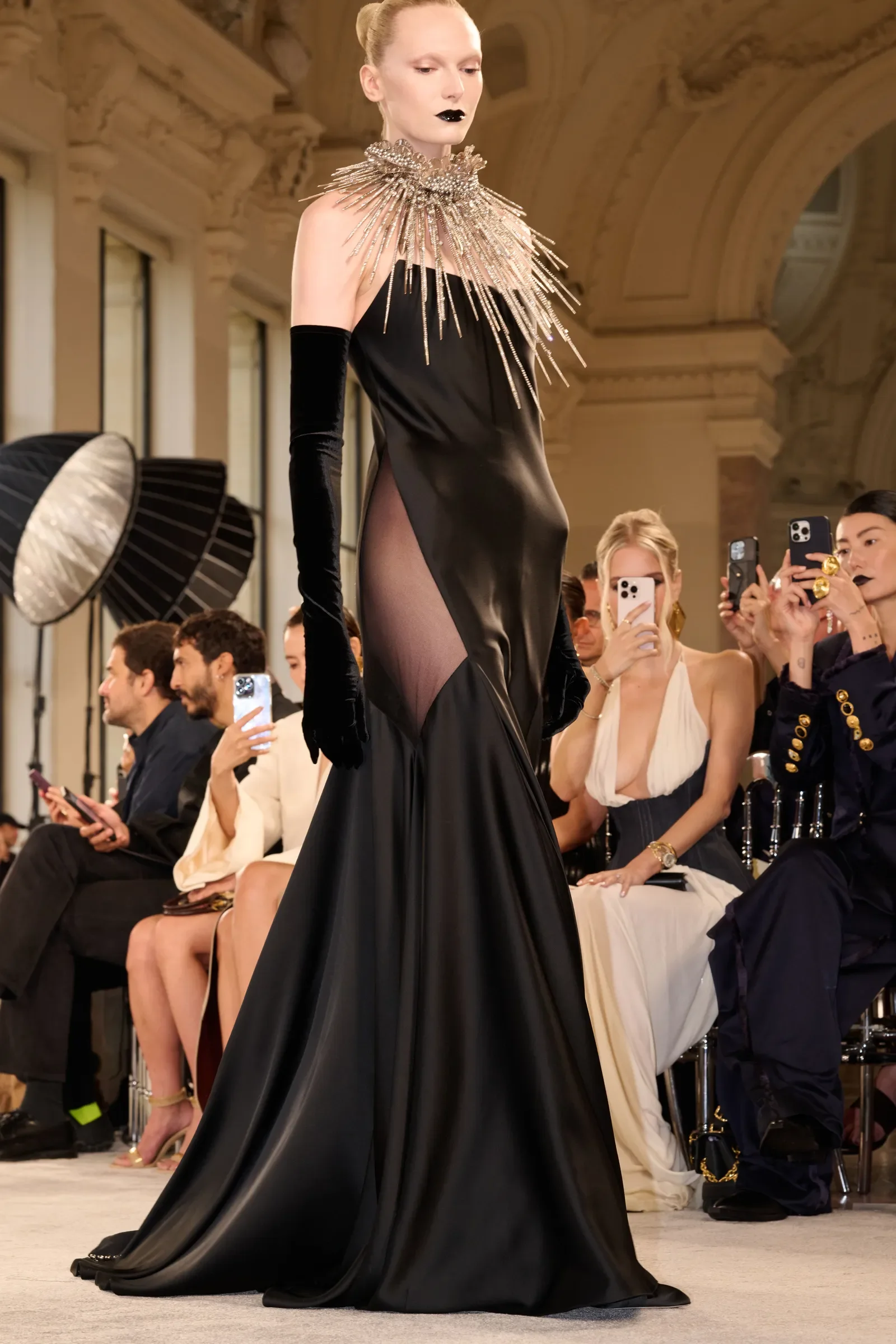
Schiaparelli Haute Couture Autumn/Winter 2025, Tatler
Now we get to the exclusivity problem. I know I said that if you’re going to block everyone else from wearing a brand, you need to come correct. But honestly, you shouldn’t be blocking everyone else from wearing a brand in the first place. Reserving a specific piece is one thing. Reserving an entire house is hoarding.
It feels especially contradictory at a public art event like the Met Gala, which is supposed to be about costume history, artistic interpretation and public spectacle. For one attendee to effectively wall off an entire fashion house feels weirdly anti-art. The whole point of fashion at the Met is that it becomes a conversation. Different bodies, different stylists, different references, different levels of nerve. An exclusivity deal shuts that conversation down.
Yes, it may seem strange to criticise exclusivity in the context of luxury, when traditional luxury has always been built on scarcity, access and separation. But even luxury has had to adapt. Most houses now want cultural reach as much as private-client prestige. Schiaparelli is a perfect example. By rights, its haute couture status should make it one of the most rarefied names in fashion. Yet under Daniel Roseberry, it has become something much bigger than a niche couture house. It has become a defining reference in contemporary culture, fuelled by viral red-carpet moments, theatrical design and museum-level spectacle.
That is why the exclusivity deal feels so frustrating. Fashion is supposed to be interpretive and collaborative. This turns it into territorial ownership. The Met Gala works best when multiple people interpret the same house differently. Part of the fun is comparing the Muglers, the Chanels, the Gallianos, the Valentinos. You get to see how one designer’s language changes depending on who is wearing it, who is styling it and what they are trying to say.
But when one person blocks an entire couture house from appearing, especially one as conceptually rich as Schiaparelli, the carpet loses creative range. And let’s be honest: we all know Schiaparelli could have given us more than one memorable interpretation of “Fashion Is Art”. Instead, the house was reduced to a single look. A polite look. A safe look. A look that did not justify the lockout.
Where Was the Imagination?
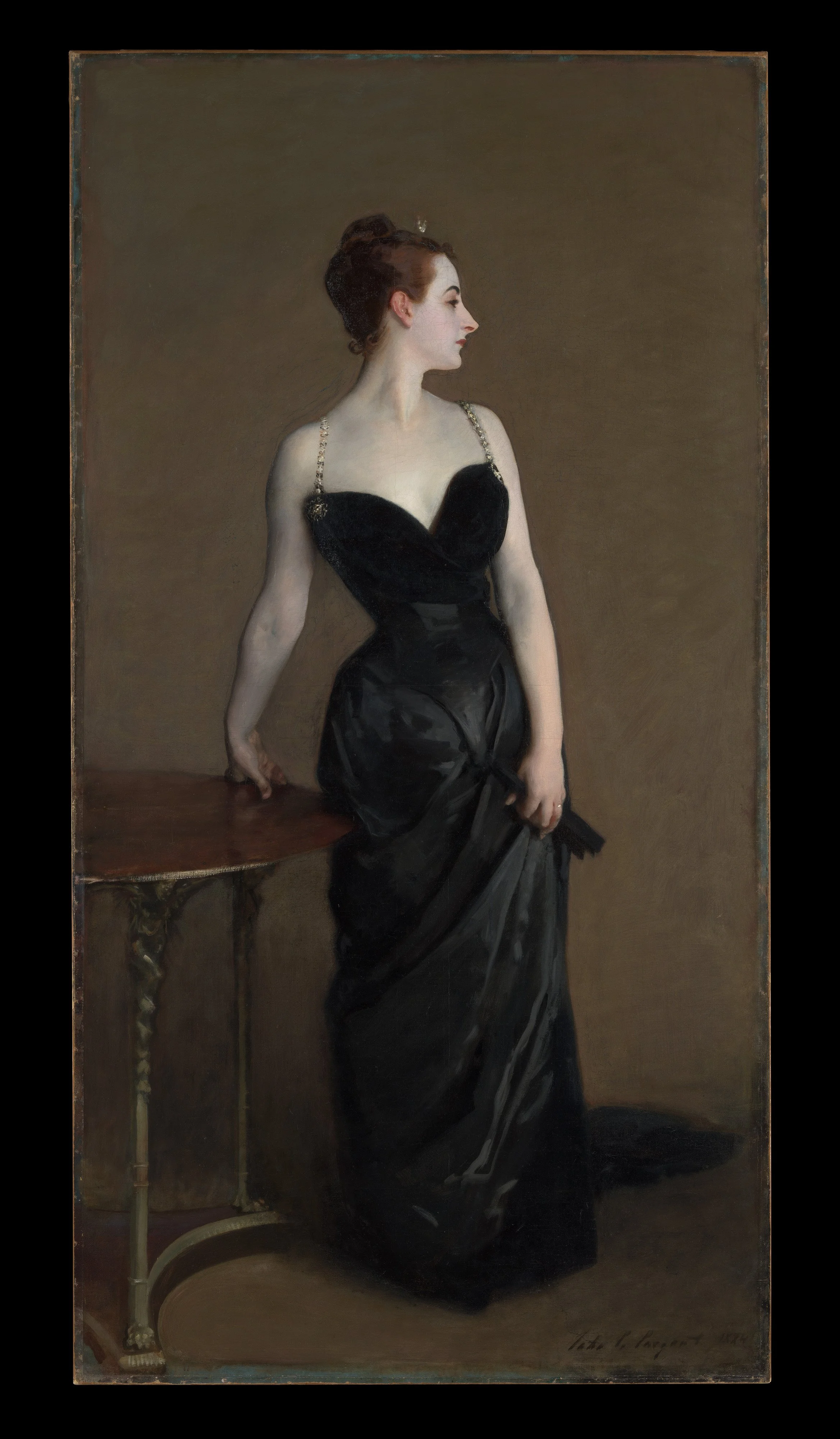
Madame X (Virginie Amélie Avegno Gautreau) by John Singer Sargeant, Metropolitan Museum of Art
A lot of celebrities misunderstood the theme because they approached it far too literally. “Fashion Is Art” does not mean “dress like a painting”. It does not mean finding a famous portrait, lifting the silhouette, adding expensive fabric and calling it interpretation. True fashion artistry lives in the gap between reference and reinvention. It needs distortion, exaggeration, theatre, humour, danger. It needs a point of view.
That is where the Madame X reference fell flat. John Singer Sargent’s portrait was scandalous in 1884 because Virginie Amélie Avegno Gautreau looked far too comfortable being looked at. The pale skin, the black gown, the exposed shoulders, the original fallen strap: it all suggested a woman who was sensual, self-possessed and not remotely interested in performing innocence. In its own time, that was enough to cause outrage. Madame Gautreau was seen as too knowing, too modern, too sexual. The scandal was not really the dress. It was the implication that she knew exactly what she was doing.
But in 2026, not only is a sleek black off-the-shoulder gown not scandalous, it’s standard luxury red carpet dressing. Beautiful, yes. Subversive, no. Women being visibly comfortable with their sexuality is still policed, of course, but the modern scandal does not look the same as it did in the nineteenth century. A sharper interpretation would have asked: what does a scandalous woman look like now? What makes society panic today? Female ageing? Cosmetic surgery? Wealth? Desire? Power? Exhibitionism? Control?
That is the missed opportunity. The look referenced a scandal without creating one.
And this speaks to a wider problem. Fashion at the highest level has become expensive, polished, strategic and PR-approved, but often less imaginative. The rough edges have been sanded off. The risk has been managed out of the room. That matters because the Met Gala is one of the last spaces where fashion is supposed to become irrational, excessive and impossible to ignore
Cream Carpets and Corporate Optics
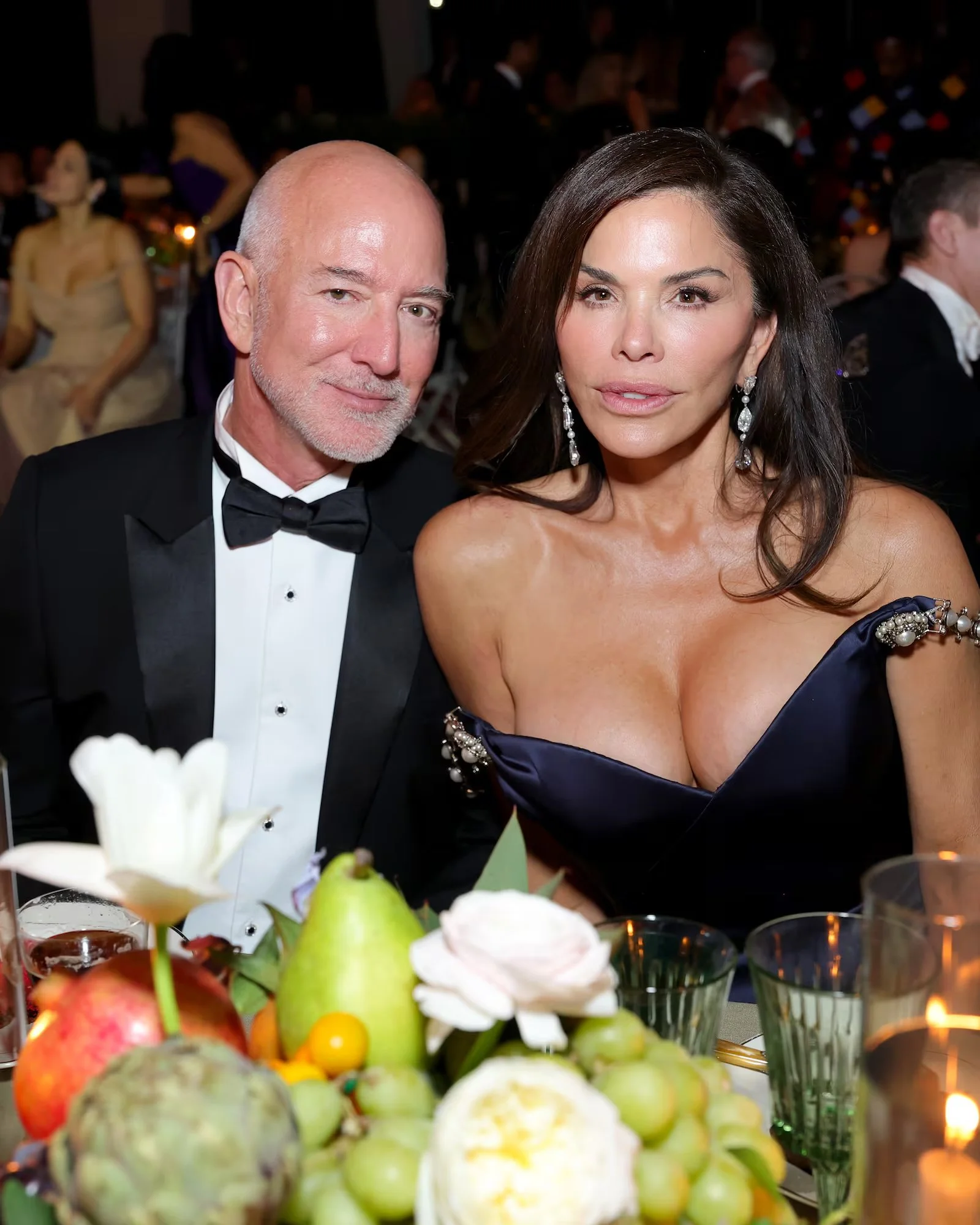
Jeff Bezos and Lauren Sánchez Bezos at the 2026 Met Gala, The Looker
Now for the part that really got people angry: Jeff Bezos’s involvement in the Met Gala.
Bezos and Lauren Sánchez Bezos were widely reported as major sponsors of the evening, complete with honorary chair titles attached to the cheque book diplomacy. Obviously, the problem wasn’t that rich people attended the Met Gala. The Met has never sold itself as a humble gathering of the masses. It’s an event built on wealth, status, and spectacle. But there’s a difference between wealth existing around fashion and wealth attempting to rebrand itself through fashion.
That’s why the Bezos presence landed awkwardly for so many people. It felt less like cultural patronage and more like reputation management. And the problem with reputation management is that it only works if the public agrees to forget everything else. People didn’t suddenly stop thinking about Amazon’s labour controversies, union disputes or the optics of extreme wealth accumulation simply because the carpet was cream and everyone was wearing archival jewellery. Several outlets reported backlash ahead of the gala, including boycott calls and criticism tied directly to Bezos’s role as a major financial backer of the event.
What made the appointments feel particularly artificial is that neither Jeff Bezos nor Lauren Sánchez Bezos has a deep-rooted relationship with fashion itself. They aren’t designers, editors, stylists, collectors, image-makers or long-standing creative figures whose presence naturally expands the conversation around the theme. They entered the space through patronage. That is hardly new in elite cultural circles, but people are becoming less willing to pretend that money and cultural relevance are interchangeable.
And in many ways, Lauren Bezos’ Schiaparelli look became the perfect symbol of that tension. The issue was never that the dress was ugly. It was perfectly polished, perfectly expensive and perfectly safe. That was precisely the problem. Securing exclusivity with one of the most anticipated haute couture houses of the night, only to produce a look with all the danger of a luxury hotel lobby, summed up the wider mood around the gala.
Too much red carpet fashion now feels terrified of risk. Yes, there were guests who embraced the theatricality of the theme and understood that the Met Gala is supposed to flirt with absurdity. But too many others approached “Fashion Is Art” like they were dressing for a very expensive board meeting. At a gala celebrating creativity and fantasy, safety ended up feeling like the real faux pas.
The Problem Was Never the Dress
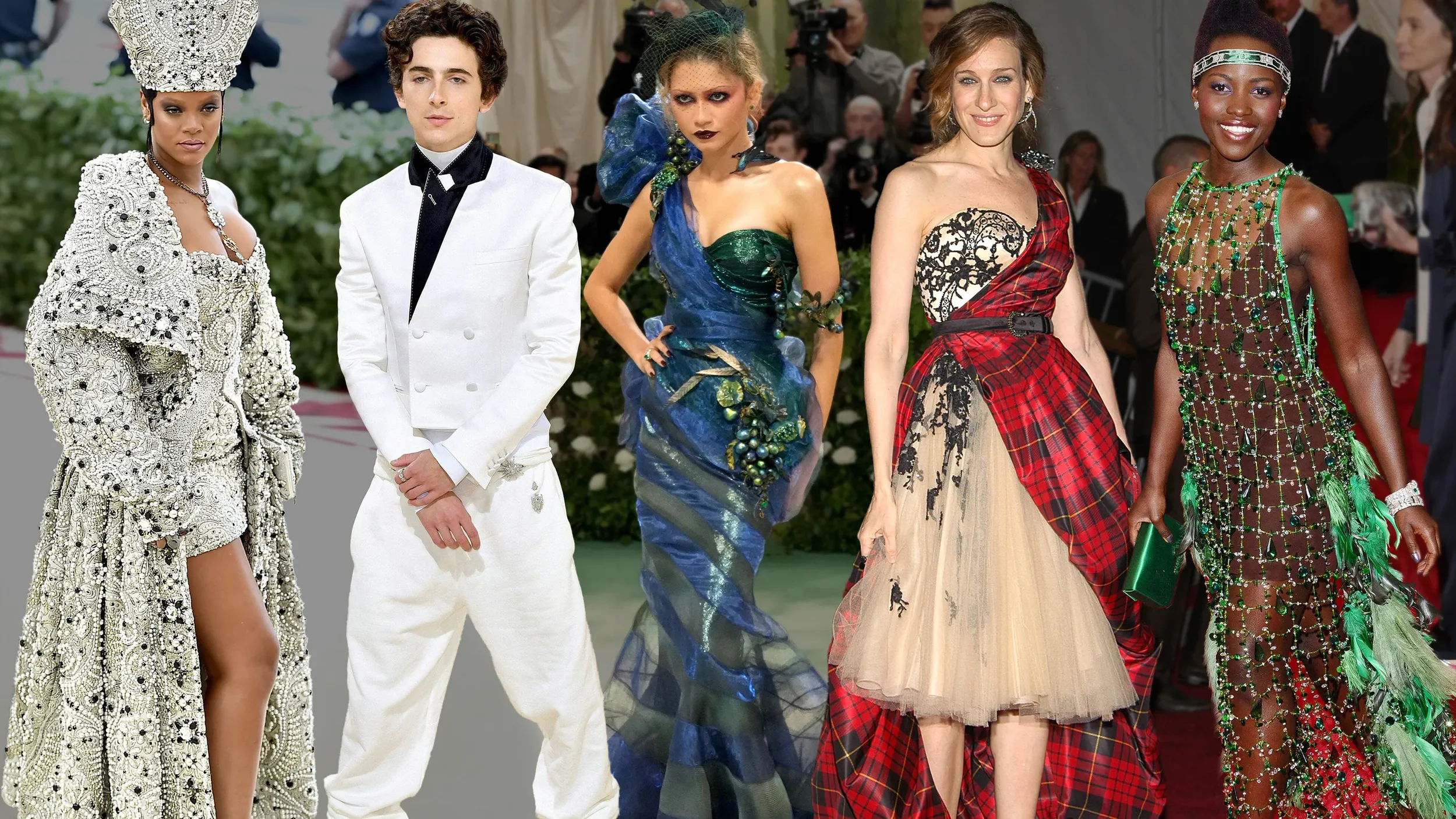
Best Met Gala looks over the years, Vogue
Ultimately, the backlash to Lauren Sánchez Bezos’s Schiaparelli look was never really about one black dress. If anything, the dress itself was perfectly fine. Elegant, polished, flattering. Under normal circumstances, nobody would have cared. But the Met Gala isn’t supposed to operate under normal circumstances. This is the one red carpet where fashion is expected to be excessive, theatrical, strange, intellectually ambitious and occasionally a little unhinged. “Nice” is not enough.
That is why the reported exclusivity around Schiaparelli frustrated so many people. Schiaparelli isn’t just another luxury label. It is one of the few major fashion houses that still understands fantasy. Its entire identity is built on surrealism, spectacle and artistic risk. To remove that house from the wider red carpet conversation, only to produce something so safe, felt like a waste of creative potential.
And perhaps that is the real issue haunting the modern Met Gala. More and more, the event feels less like a celebration of fashion as art and more like a networking event for the ultra wealthy with better tailoring. The people with the greatest access increasingly seem the least interested in taking risks. Fashion becomes reputation management instead of self-expression. Art becomes branding.
The irony is that the theme was “Fashion Is Art”. Art is supposed to provoke something. Delight. Confusion. Horror. Obsession. Anything, really. What it should not provoke is indifference.
