Cruise Control: Gucci Forgot Where It Was Going
Wait, This Was Cruise?
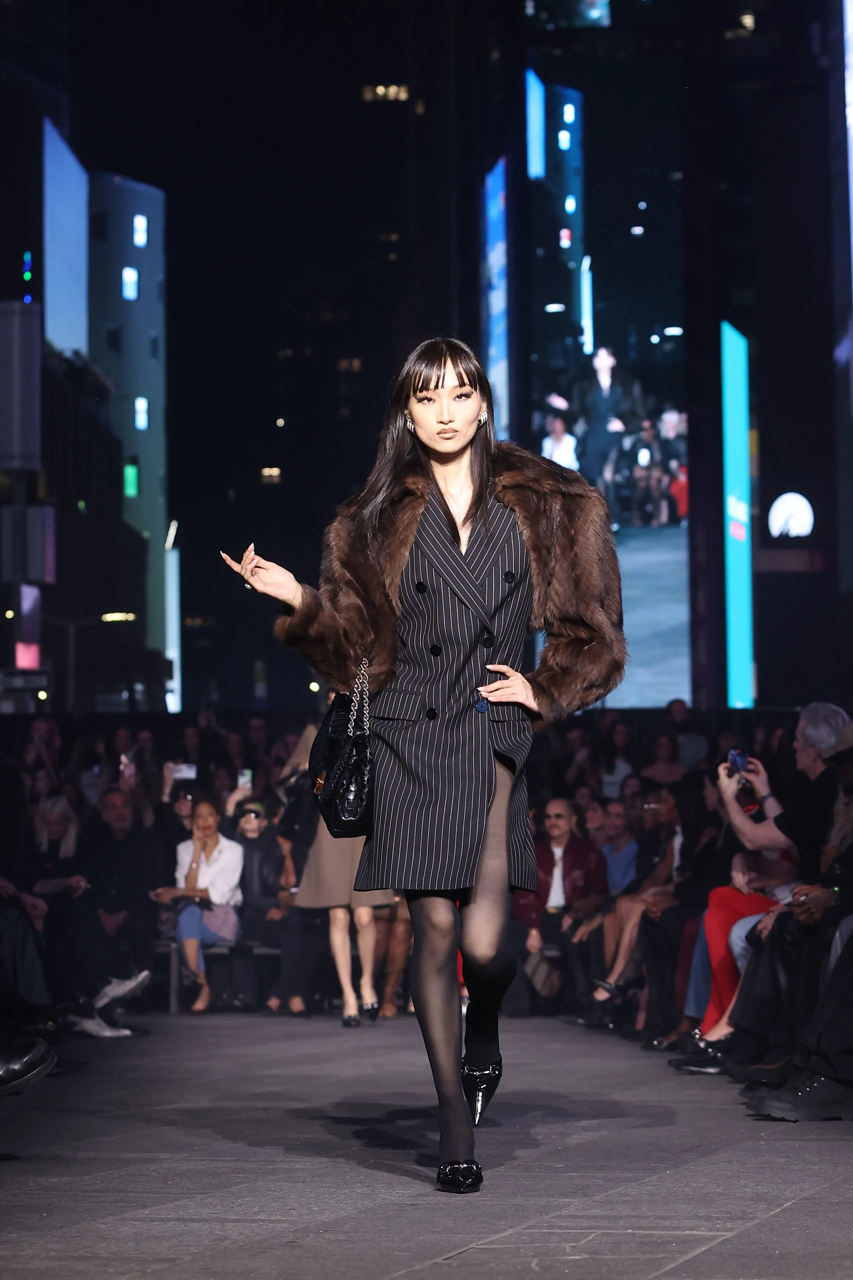
Gucci Resort 2027 Collection, PAUSE Magazine
This past Saturday, Gucci presented its Cruise 2027 show in Times Square, New York City. I suspect, however, that most people wouldn’t have recognised it as a Cruise collection unless they had been told in advance. With its trench coats, structured tailoring, pinstripe banker suits and layered black looks, anyone could be forgiven for thinking they had accidentally wandered into an Autumn/Winter ready-to-wear show.
Creative director Demna, known for breaking fashion’s rules, clearly intended the contradiction. Reuters described the collection as “GucciCore”, built around New York’s multiplicity, while ELLE highlighted its “commutercore” framing. Fine. Fashion doesn’t need to repeat itself forever. Cruise doesn’t have to mean kaftans, raffia bags and rich women pretending they discovered linen. But categories exist for a reason.
Cruise collections aren’t just administrative slots in the fashion calendar. They carry a specific emotional and practical purpose: escape, movement, lightness, transition, pleasure. They belong, at least in spirit, to warmer climates, holiday wardrobes and the fantasy of going somewhere else. Times Square, with all its noise, density and corporate glare, isn’t exactly whispering “resort”. It’s barely whispering at all.
That’s where Gucci’s show becomes interesting, and frustrating. In trying so hard to avoid the obvious language of Cruise, Demna’s Gucci may have stripped the category of its identity altogether. The result wasn’t necessarily a bad collection. It was polished, deliberate and conceptually clear. But as a Cruise show, it felt emotionally off-season. At some point, reinvention stops being clever if the thing being reinvented becomes unrecognisable.
Cruise Has a Job
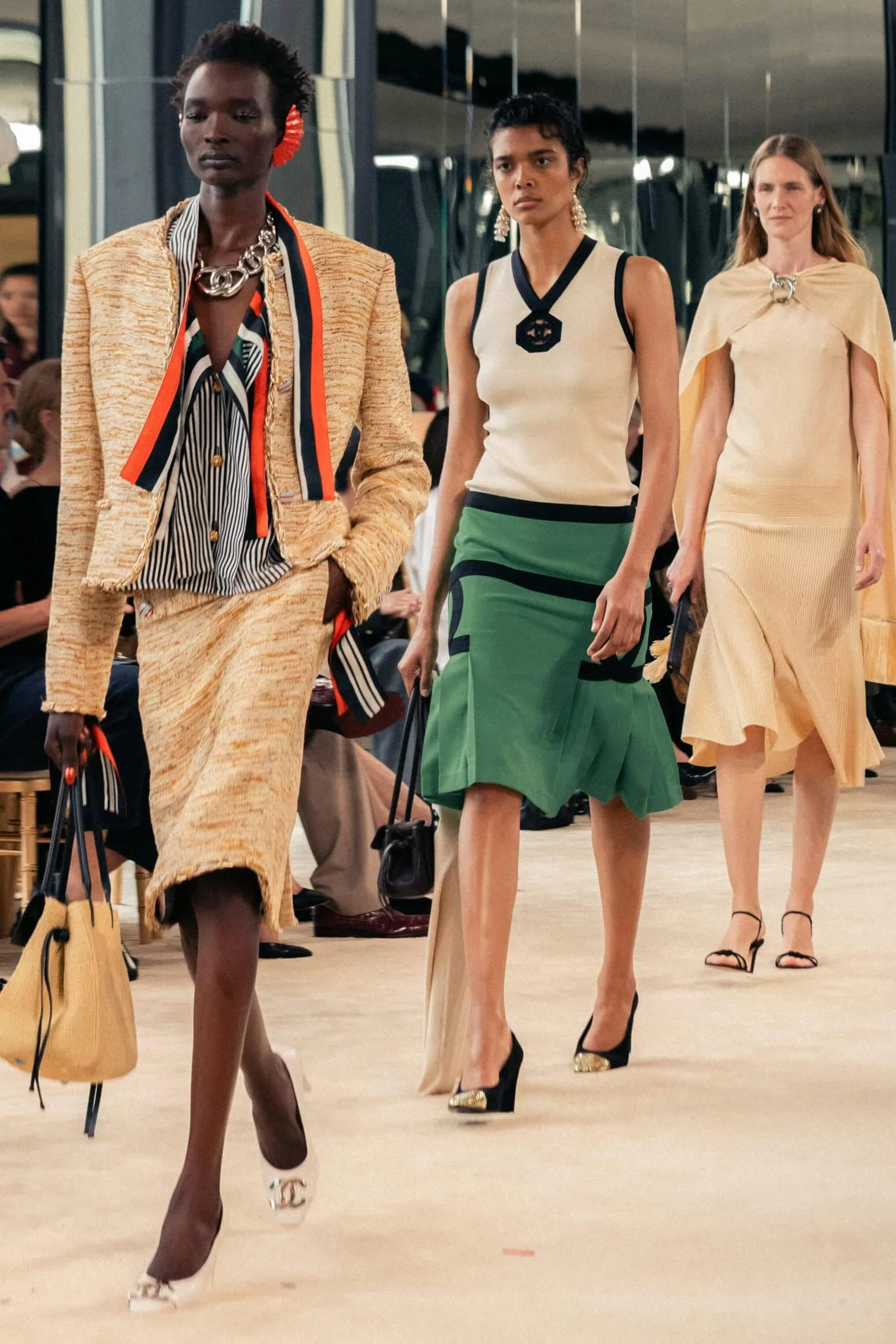
Chanel Cruise 2027 Collection, The Impression
Let’s start with a little bit of clarification. Cruise, Resort and Pre-Spring are essentially the same category in fashion. They sit between the main Autumn/Winter and Spring/Summer seasons, which means they are not just decorative extras in the fashion calendar. They exist because they once served a very specific purpose.
Cruise collections originated in Europe in the early 20th century for wealthy clients travelling during winter to warmer climates, often by ocean liner or to resort destinations. These were clothes designed for people escaping the cold, packing for post-Christmas holidays and dressing for leisure, travel and sun. Vogue traces the category back to high-net-worth customers preparing for winter getaways, with wardrobes suited to warmth, movement and ease.
Coco Chanel helped shape the idea in 1919, designing pieces outside the main seasonal schedule for women holidaying in the Mediterranean or Caribbean. Think fluid silk jersey dresses, light knits and clothes that made sense near the beachfront, not under the fluorescent misery of an office ceiling. From there, Cruise developed its own emotional language: lightness, travel, relaxation, transition, glamour and movement. But above all, it became associated with escape.
Of course, Cruise shows have become far bigger than holiday wardrobes. Fashion evolves. It should. Nobody needs every Cruise collection to look like a yacht catalogue, complete with raffia bags, linen trousers and someone called Allegra pretending she discovered Capri. But there is a difference between evolving a category and hollowing it out completely.
Seasonality matters because it gives fashion rhythm. It tells us what a collection is meant to feel like before we even get to the clothes. Cruise does not have to be literal, but it should still suggest release. It should make some kind of emotional promise. When that disappears, the category stops feeling reimagined and starts feeling meaningless.
The Clothes Said February
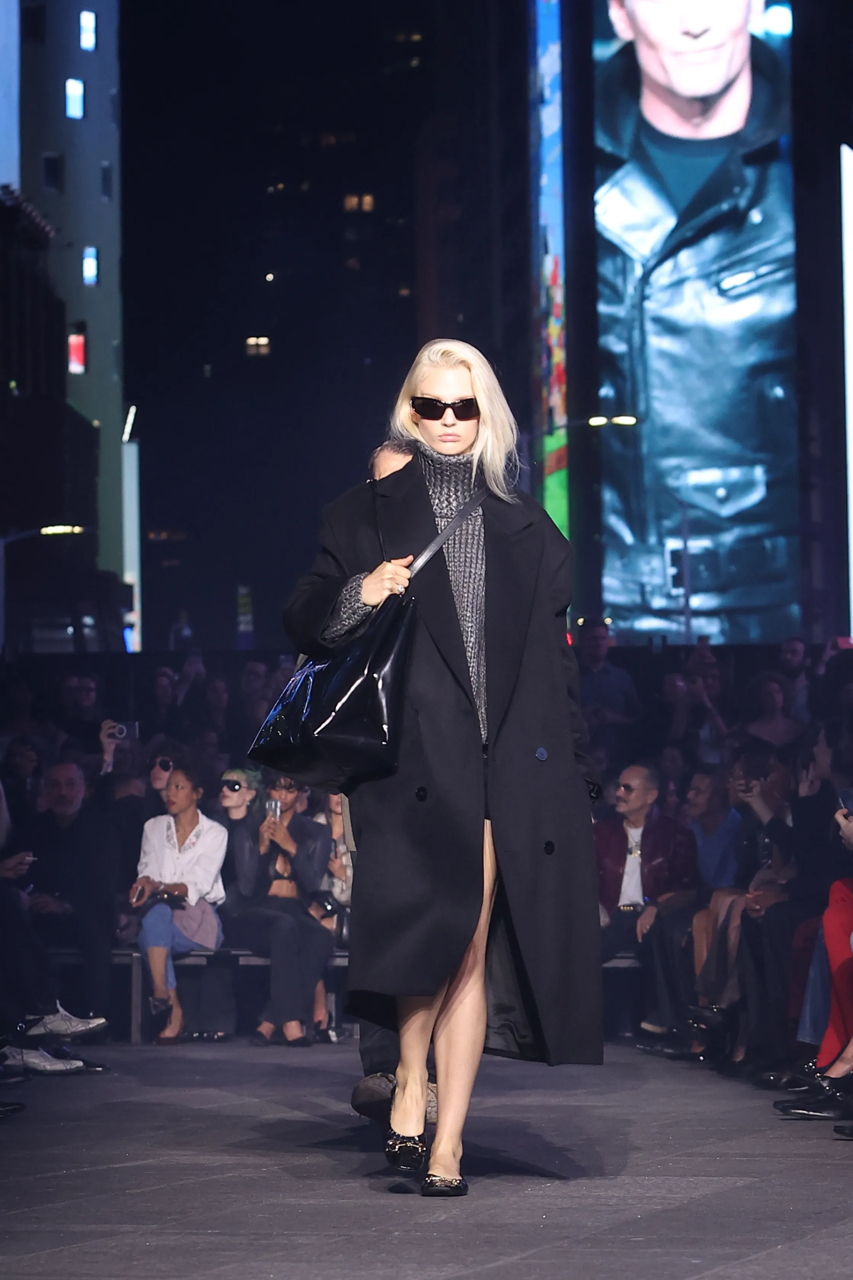
Gucci Resort 2027 Collection, PAUSE Magazine
Like I said earlier, Gucci’s Cruise 2027 show looked less like Cruise and more like Autumn/Winter that had wandered onto the wrong schedule. The clothes themselves were not the problem. In fact, they looked great: sharp, wearable and completely in line with the kind of urban severity that makes sense for Demna’s Gucci. The issue is that looking good and looking like Cruise are not the same thing.
Take the pinstripe suiting and structured tailoring. Beautifully cut, yes. But emotionally, those looks read Wall Street, boardroom, corporate New York. They suggested meetings, commutes, glass towers and power lunches, not warm-weather escape. The Times described the collection through New York archetypes, including “stockbrokers and businesspeople in pinstripes”, which rather proves the point. That is a strong concept for a Gucci show. It is just not an obvious one for Cruise.
Then there were the trench coats, peacoats and heavier outerwear. Again, individually, many of these pieces worked. A trench coat can be chic. A peacoat can be timeless. But Cruise is supposed to carry some sense of lightness, ease and seasonal transition. It should feel like movement, like release, like the possibility of going somewhere. Heavy outerwear does the opposite. It anchors the collection to the city, to weather, to routine.
The oversized faux-fur and shearling coats complicated things further. They may not have had the same “commutercore” energy as the suiting or trench coats, but they still pushed the mood away from resort and towards winter glamour. Fabulous? Potentially. Cruise? Not really. The same applies to the leather. Leather can absolutely work in a resort context when handled with sensuality, looseness or ease. Here, though, it contributed to the downtown, nightlife, city-hardness mood. The Times also noted cropped leather jackets and slashed dresses as part of the collection’s New York mix, which sounds far more after-dark Manhattan than sunlit escape.
None of these elements are bad in isolation. A pinstripe suit can be chic. A trench coat can be beautiful. A faux-fur coat can be fabulous. A leather jacket can be sexy. But when these pieces dominate a Cruise collection, the emotional temperature changes completely. That’s where the collection became frustrating. A lot of it worked as clothing. It just did not work as Cruise. The clothes had polish, attitude and commercial appeal, but they offered very little lightness, release or seasonal transition. It was less “where are we going?” and more “what floor is the meeting on?”
Who Takes a Cruise to Times Square?
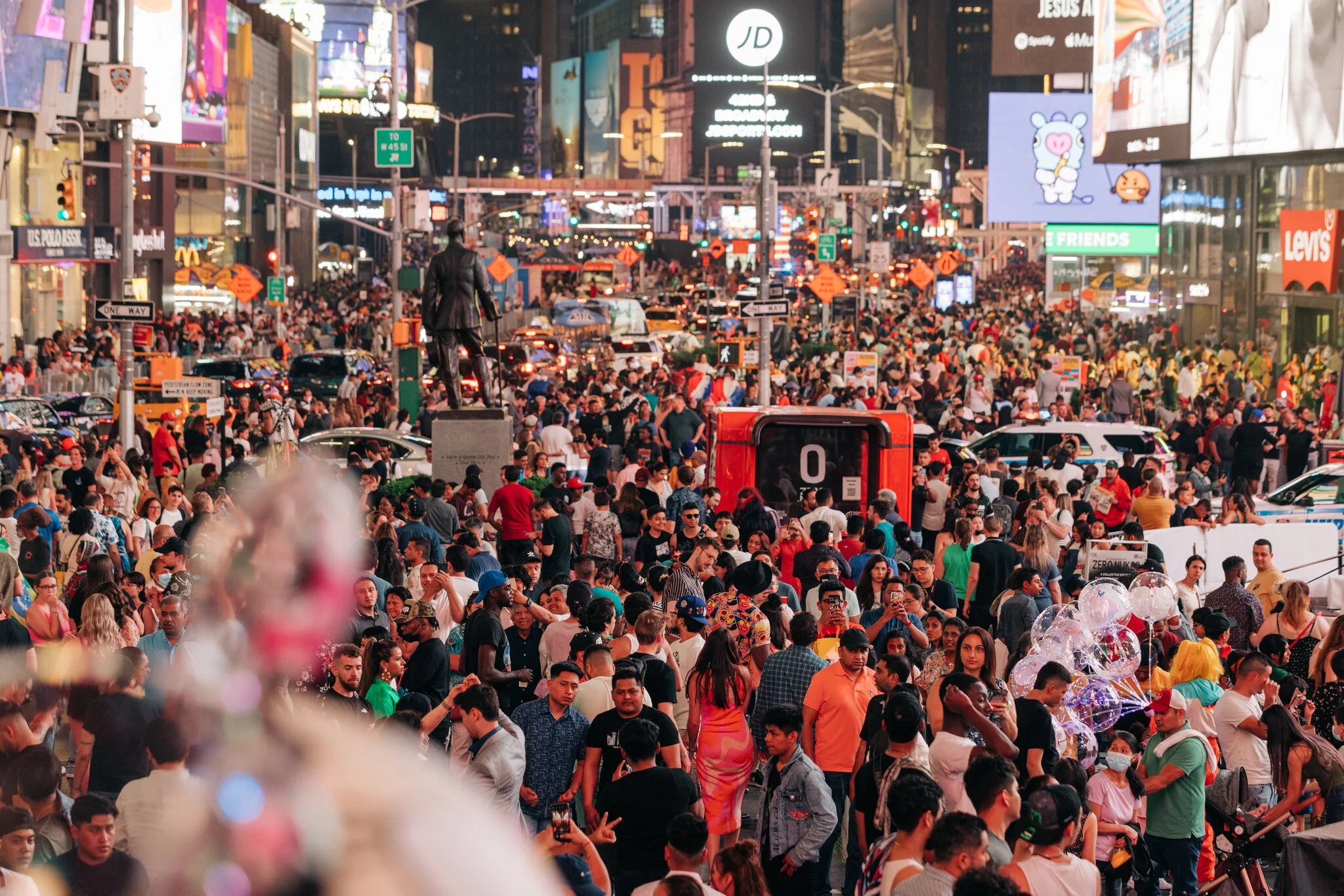
Times Square, The New York Times
In fashion, location is never just scenery, whether we’re talking about a campaign shoot or a runway show. It’s part of the styling, part of the storytelling and, if the brand is doing its job properly, part of the argument. That matters even more for Cruise, because it’s already a travel-coded category. Its history is tied to movement, winter sun, wealthy clients escaping colder climates, and clothes designed for a life away from ordinary routine. For Cruise, location carries extra weight because the category is built on the fantasy of elsewhere.
When people think of Cruise, certain places come to mind. Not necessarily boats, beaches and palm trees in the most obvious sense, but places that suggest movement, leisure, cultural romance, glamour and escape. Venice, Rio, Barcelona, Marseille, Mexico City, or even London when there is a clear house-history rationale. Chanel staged its Cruise 2025 show on the roof terrace of Le Corbusier’s Cité Radieuse in Marseille. Gucci’s previous London Cruise show drew on Guccio Gucci’s history at the Savoy. Louis Vuitton went to Barcelona and Max Mara to Venice. These places do not all say “resort” in the same way, but they do say departure. They transport you somewhere.
Times Square, by contrast, is probably one of the last places that would come to mind when one thinks of escape. Yet that is where Demna chose to present Gucci Cruise 2027. Harper’s Bazaar described it as “the centre of gravity for American commercialism”, which is precisely the problem. Gucci shut down the centre of Times Square and bought out most of its giant digital screens for the evening. Visually, it was a spectacle. Emotionally, it was pure congestion.
To be fair, Gucci does have a genuine New York connection. New York was the location of Gucci’s first store outside Italy in 1953, and Demna framed the show as a kind of homecoming. Fine. But there were more imaginative ways to honour that history. Cruise locations do not need to be beaches or yacht clubs. Chanel proved that with its Cruise 2007 show at Grand Central Station. A train station isn’t a Mediterranean hotel, but it still suggests movement, luggage, arrivals, departures, glamour and escape. If Demna wanted to honour Gucci’s connection to New York, JFK Airport would have been a much better venue.
A Cruise show doesn’t have to smell faintly of sunscreen and inherited money. But it should offer some sense of departure. Times Square offered the opposite: density, signage, noise, commerce and the feeling of being emotionally mugged by LED screens. For a collection already flirting dangerously with Autumn/Winter, the setting pushed it even further away from escape.
The Calendar Is Collapsing
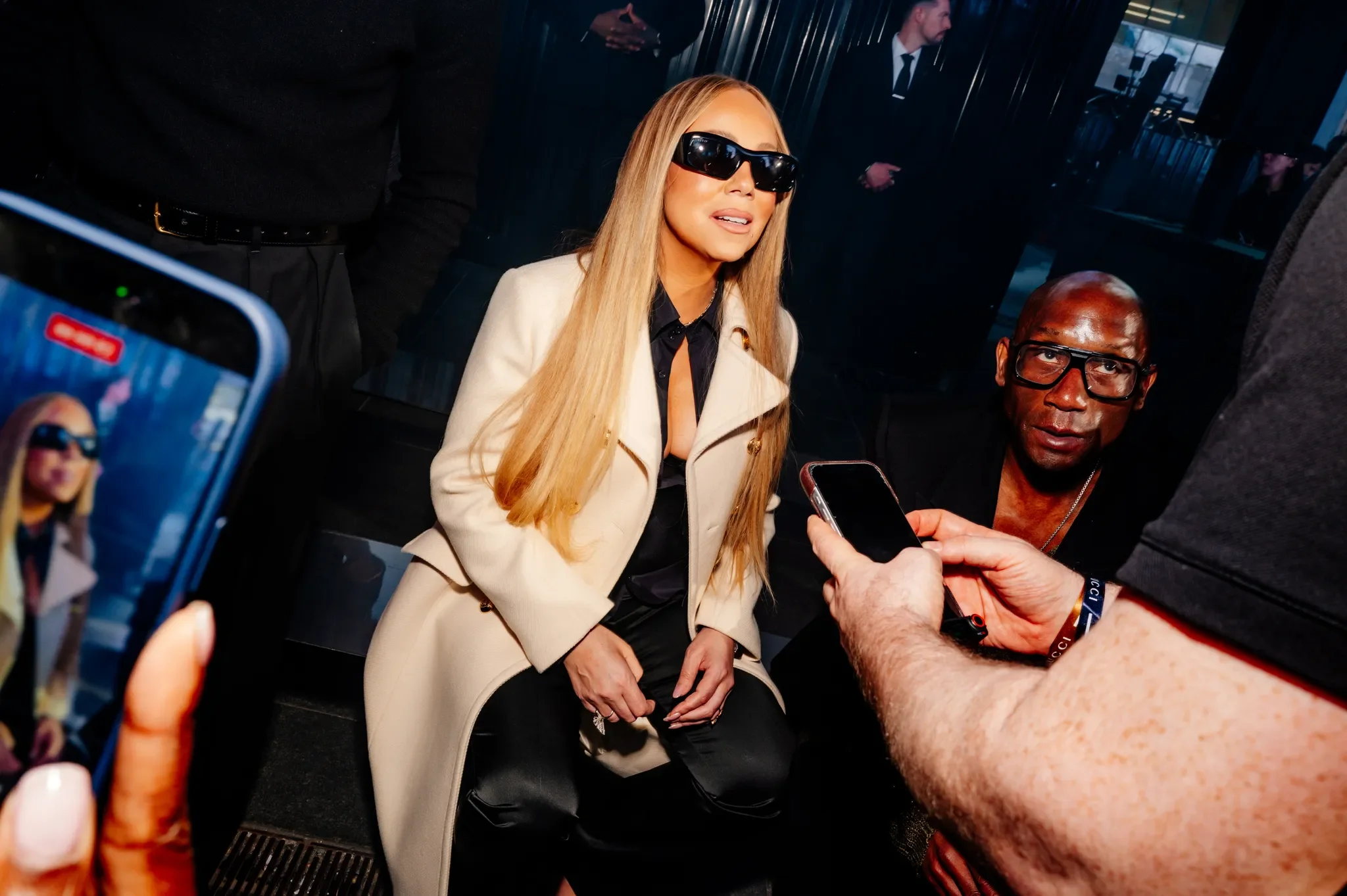
Mariah Carey at Gucci’s Cruise 2027 Show, British Vogue
Gucci’s Times Square show wasn’t an isolated problem. It was a symptom of a wider one: fashion is flattening its own calendar. Cruise, Pre-Autumn, Spring/Summer and Autumn/Winter increasingly feel less like distinct seasonal propositions and more like different launch windows for the same brand content machine.
This is not unique to Gucci. Alessandro Michele’s first Valentino collection was technically Resort 2025, but in practice it functioned as a full creative manifesto: 171 ready-to-wear looks and 93 accessories shots, surprise-released after only two months in the job. Burberry’s 2016 “see-now-buy-now” model also challenged the traditional calendar by collapsing runway fantasy into immediate retail. Balenciaga’s 2024 Los Angeles show blurred things further. Technically Autumn/Pre-Autumn, it leaned into LA archetypes: palm trees, Erewhon bags, coffee cups, athleisure, celebrity incognito dressing and front-row spectacle.
What fashion keeps forgetting is that categories and seasons exist for a reason. Part of it is practical. Spring/Summer, Autumn/Winter, Cruise and Pre-Autumn help buyers, editors and customers understand what clothes are for, when they arrive and how they should be worn. But seasons aren’t just logistics. They are mood. Spring/Summer suggests heat, skin, colour and ease. Autumn/Winter suggests layering, weight, texture and drama. Cruise suggests escape, travel, lightness and leisure. Pre-Autumn suggests transition, polish and early autumn practicality. That emotional coding matters because fashion isn’t just product. It’s desire. A collection needs to tell customers not only what they are buying, but what world they are entering.
Gucci, however, wasn’t just staging a Cruise show. It was staging a brand-revival spectacle. With Gucci’s first-quarter 2026 revenue down, Times Square was never just a venue. It was a giant illuminated reassurance to investors, customers and the industry that Gucci still knows how to command attention. Around 50 screens reportedly lit up with fictional Gucci ads, from Gucci Acqua to Gucci Pets, followed by a Gucci Mansion afterparty complete with branded experiences. At that point, the clothes were competing with the Gucci cinematic universe.
The celebrity machinery only amplified this. Paris Hilton, Tom Brady and Cindy Crawford appeared on the runway, while Mariah Carey, Playboi Carti, Shawn Mendes, Lindsay Lohan, Kim Kardashian and others filled the front row. Celebrity presence is nothing new. The problem is when the collection starts to feel like the excuse for assembling the guest list.
And that is the issue. Brands are increasingly obsessed with moments: the location, the casting, the screens, the afterparty, the meme, the headline, the “core”. But when every show is engineered to become a cultural event, the clothes can become strangely detached from the reason the collection exists.
Evolution Is Not Erasure
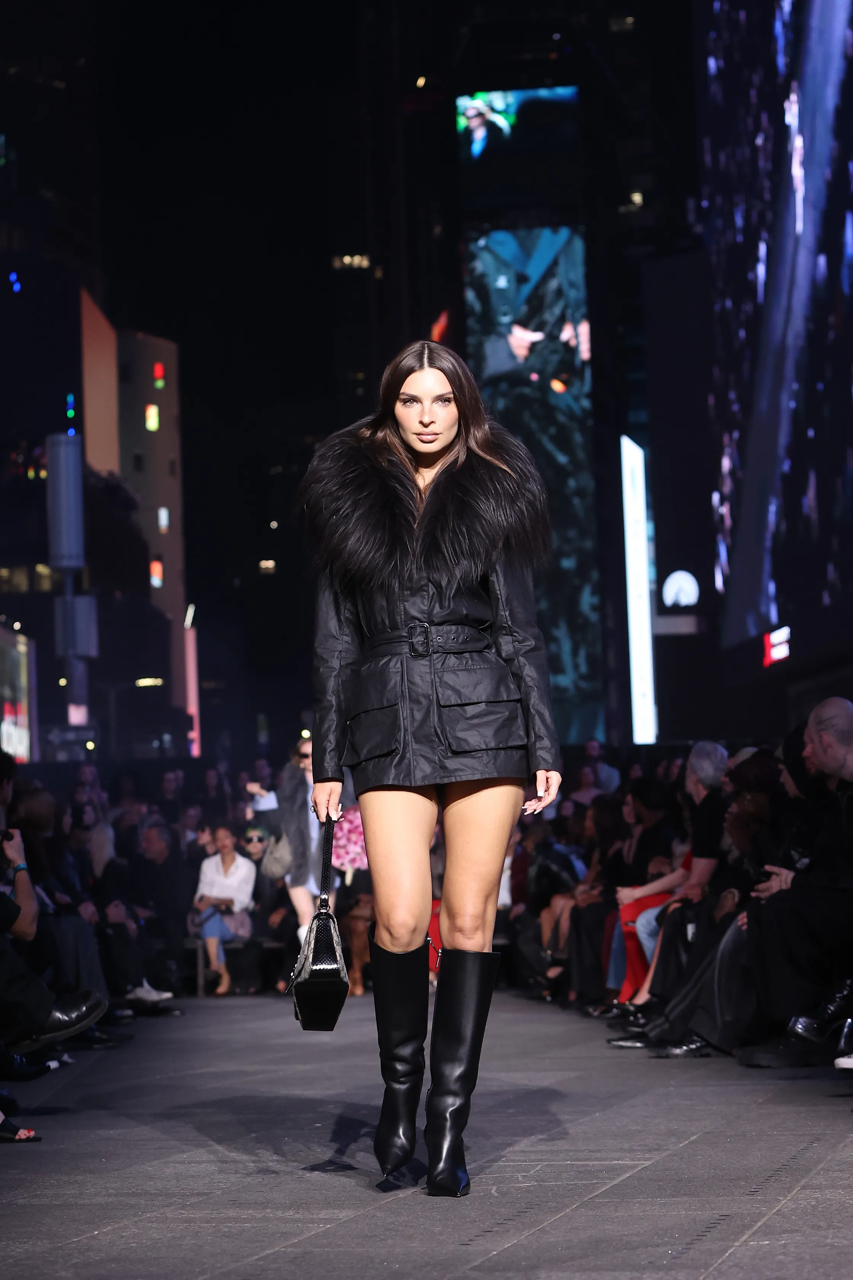
Gucci Resort 2027 Collection, PAUSE Magazine
Ultimately, the issue with Gucci’s Cruise 2027 show isn’t that Demna tried to challenge the category. Fashion should evolve. Cruise doesn’t need to be trapped forever in a fantasy of linen trousers, sun hats and women drifting across hotel terraces with suspiciously perfect hair. But reinvention still needs to understand what it is reinventing.
Cruise collections exist for a reason. They offer escape, movement, lightness and transition. They’re not just another excuse for a runway show, another celebrity front row, another brand takeover, another glossy reminder that a house can still dominate the conversation. When those categories lose their emotional purpose, fashion starts to flatten into one endless content cycle: heavy coats, viral casting, dramatic venues, strategic resets and clothes that could belong to almost any season.
Gucci’s Times Square show was polished, deliberate and undeniably attention-grabbing. But attention isn’t the same as clarity. A Cruise show can be urban. It can be strange. It can even be uncomfortable. What it shouldn’t be is completely detached from the idea of Cruise itself.
There’s a difference between breaking the rules and forgetting why they existed in the first place.
